 Call Technician

AC Rusting Problem & How to Prevent It [Free Checklist]
Rust on your AC outdoor unit can cause gas leaks and poor cooling. Learn the warning signs, causes & easy steps to prevent AC rusting. Expert tips inside!
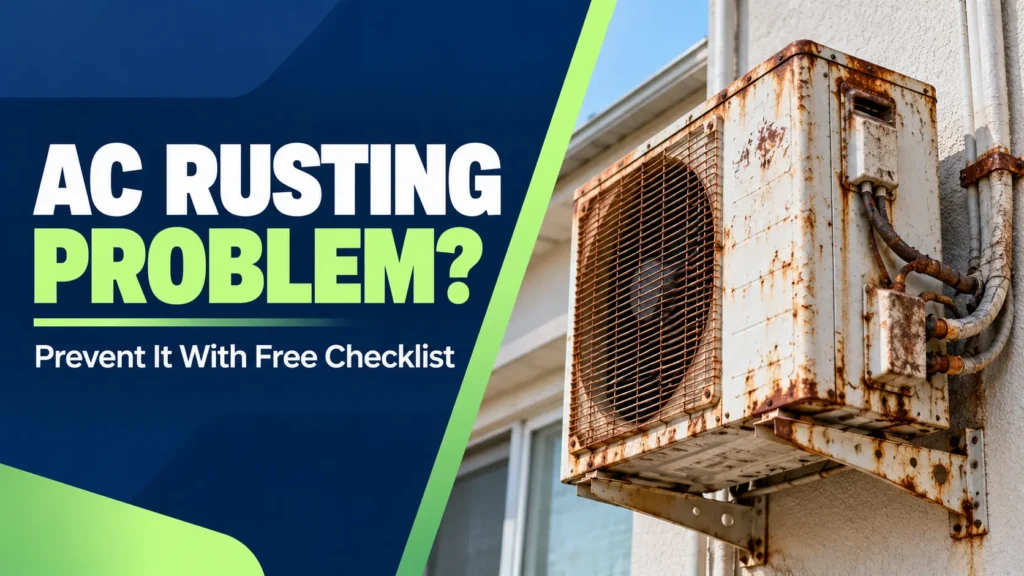
AC rusting is a common but often overlooked problem that mainly damages outdoor units, service valves, nuts, bolts, and coil fins. It usually develops from moisture, condensation, humidity, salt-laden air, and general pollution exposure.
Ignoring rust can lead to refrigerant gas leakage, poor cooling, and a shortened AC lifespan. This article covers the quick signs to check, root causes, step-by-step prevention methods, and when to call a professional.
TL;DR:
Signs Your AC Has a Rusting Problem
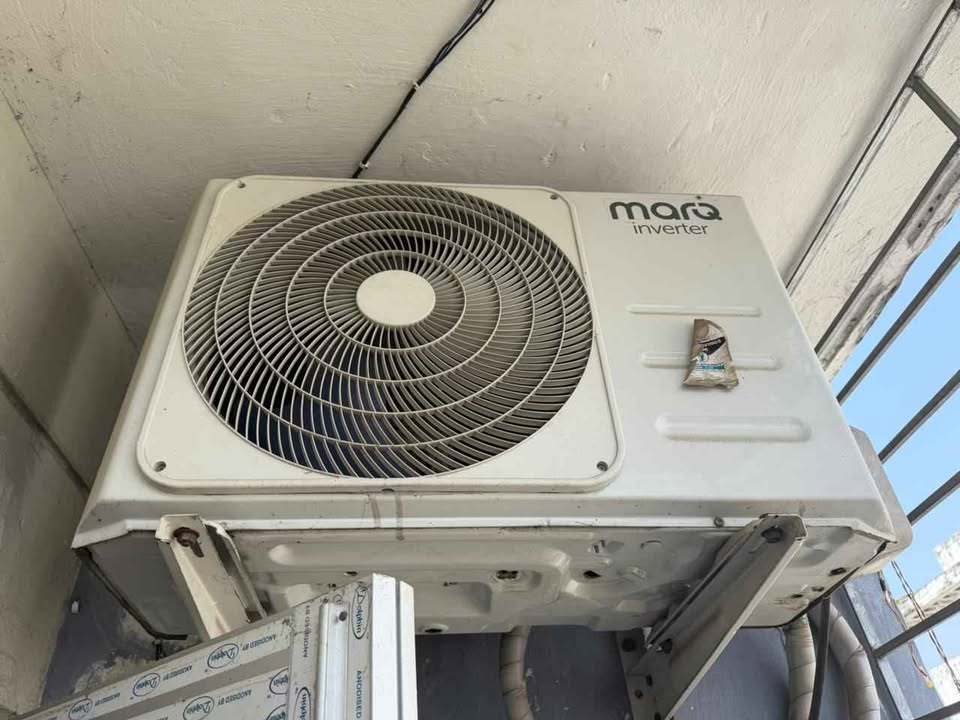
Rust often develops quietly before it causes bigger issues. Watch for these warning signs during routine checks:
If you spot two or more of these signs, it is time to inspect your AC closely before the damage spreads.
Quick Self-Check Table: Rust Location vs What It Means vs Urgency
| Rust Location | What It Usually Means | Urgency |
|---|---|---|
| Service valves / flare nuts | Condensation dripping, early corrosion | Low – DIY protect now |
| Copper pipe joints | Moisture buildup, possible future gas leak | Medium – inspect soon |
| Outdoor unit stand/bracket | Structural weakening, fall risk | High – call technician |
| Coil fins (aluminum) | Galvanic corrosion, blocked airflow | Medium – clean & recoat |
| Outdoor cabinet body | Cosmetic to moderate, weather exposure | Low – repaint/protect |
| Drain tray area | Water pooling, leads to further rust | Medium – clear & dry |

Rusting Problem in Your AC? Call Expert Technician in Kolkata for Sameday Service
Why Does an AC Rust?
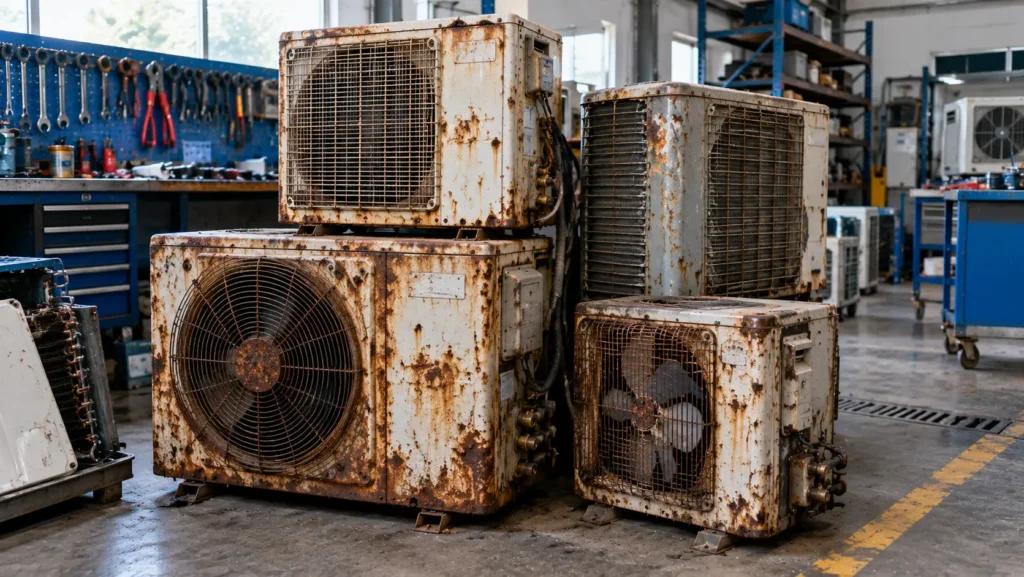
Several factors combine to trigger rust formation on your AC’s metal parts. Here are the main causes:
- Continuous water condensation – Cold copper pipes and service valves constantly collect condensation. Dripping water corrodes nearby nuts and joints over time.
- Humid or coastal weather – High humidity and salty sea air speed up oxidation on exposed metal parts.
- Rain and outdoor exposure – Direct rain contact on the outdoor unit accelerates rusting, especially on unprotected metal.
- Dust mixed with moisture – Dust trapped in moisture holds water against metal surfaces, worsening corrosion.
- Galvanic corrosion – Aluminum coil fins touching copper tubing corrode faster when moisture is present between the two different metals.
- Damaged paint or scratches – Scratched surfaces expose bare metal, giving rust a starting point.
- Chemical cleaners – Harsh cleaning chemicals strip the factory protective coating, leaving coils vulnerable.
- Poor maintenance – Skipped servicing lets dirt, moisture, and early rust go unnoticed and untreated. Read our detailed guide on AC maintenance tips.
What Happens If AC Rust Is Left Untreated?
How to Prevent AC Rusting? Step-by-Step Guide
Preventing rust is far easier and cheaper than repairing rust damage or fixing a gas leak later. Here are the proven methods to protect your AC from corrosion.
Apply Petroleum Jelly / Anti-Rust Coating on Nuts and Valves
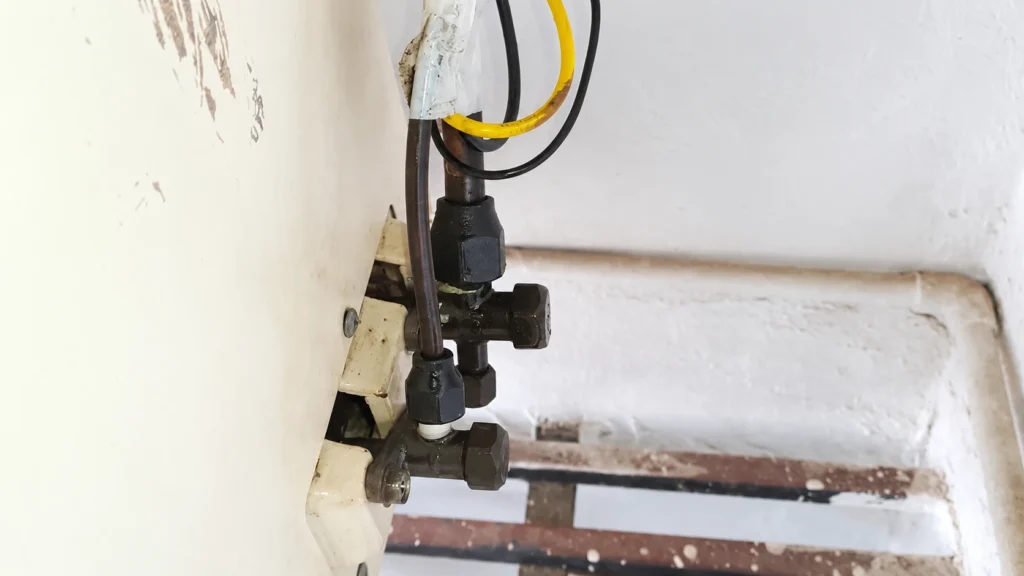
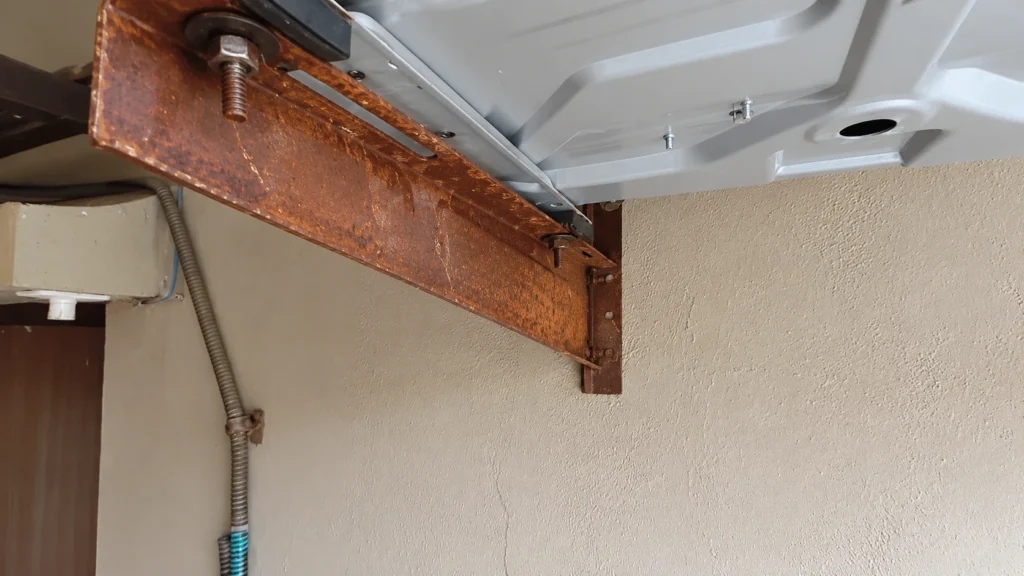
- Clean the surface and remove existing dust or rust.
- Dry the area completely before applying anything.
- Apply petroleum jelly (Vaseline) on flare nuts and cold pipe nuts to block condensation-driven rust.
- For service valves, flare nuts, copper pipes, and stand bolts, use anti-rust clear lacquer spray instead.
- Apply 2–3 thin coating layers, letting each layer dry before the next.
Protect the Outdoor Unit Stand
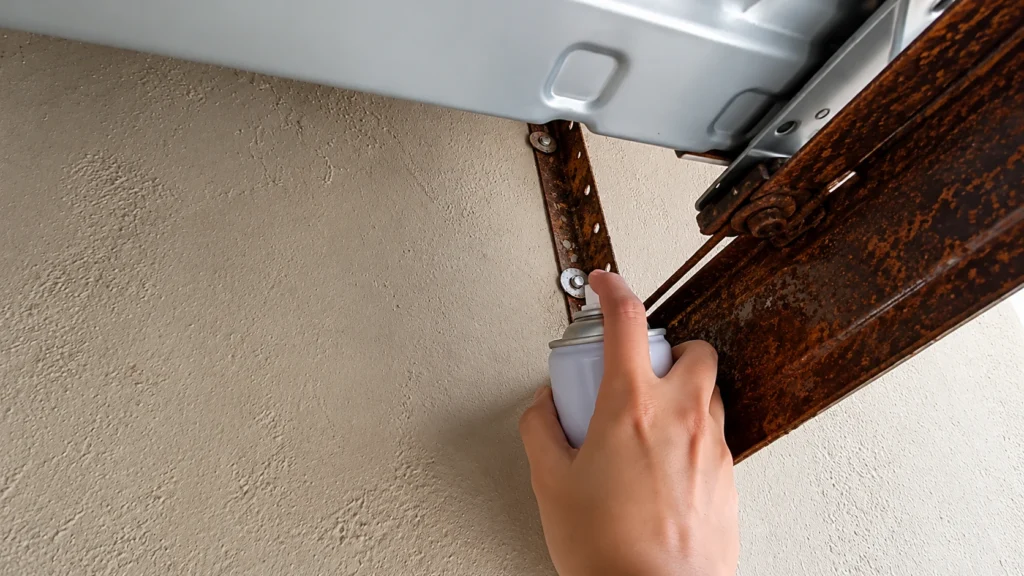
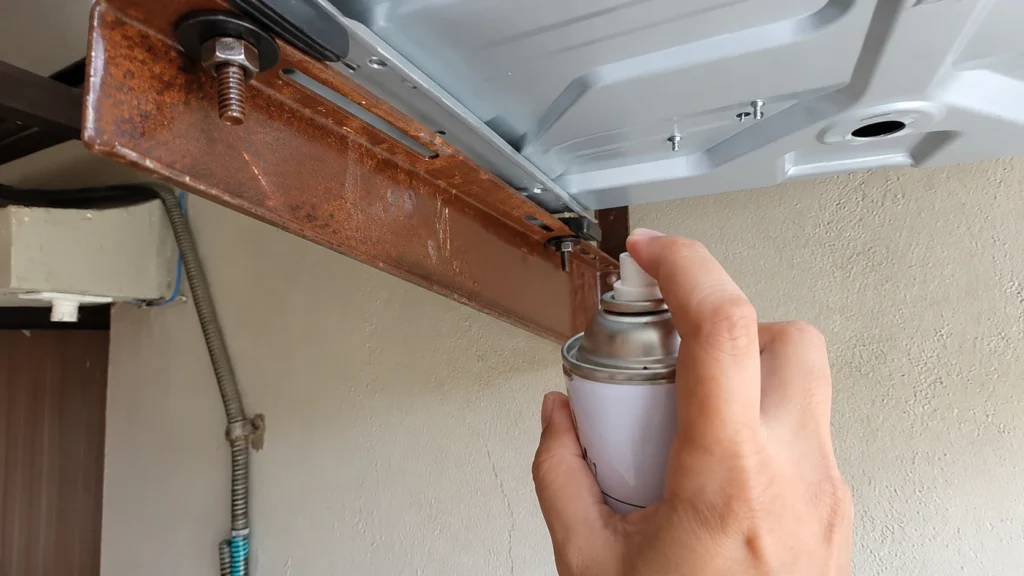
- Use red oxide primer as a base coat
- Apply weatherproof oil paint over it
- Spray anti-rust coating on all nuts and bolts
- Replace badly rusted screws and bolts with stainless steel ones
- Note: a rusted stand can weaken and cause the unit to fall, so treat this as a safety issue, not a cosmetic one
Keep the Unit Clean and Dry
- Clean dust and debris regularly around the outdoor unit
- Remove standing water near the unit after rain
- Rinse coils with a garden hose and avoid high-pressure washers
- Change or clean filters on schedule to reduce buildup on coils
- Keep at least 2 feet of clearance around the outdoor unit for airflow and easy cleaning
Improve Drainage and Control Moisture
- Slightly tilt the outdoor unit so rainwater and condensation drain off easily
- Elevate the unit on a platform to avoid water exposure during storms
- Check drain lines regularly to prevent standing water
- Trim overgrown vegetation to prevent moisture buildup around the unit
- In coastal or humid areas, consider a dehumidifier for indoor components
Use a Weather-Resistant Cover (Correctly)
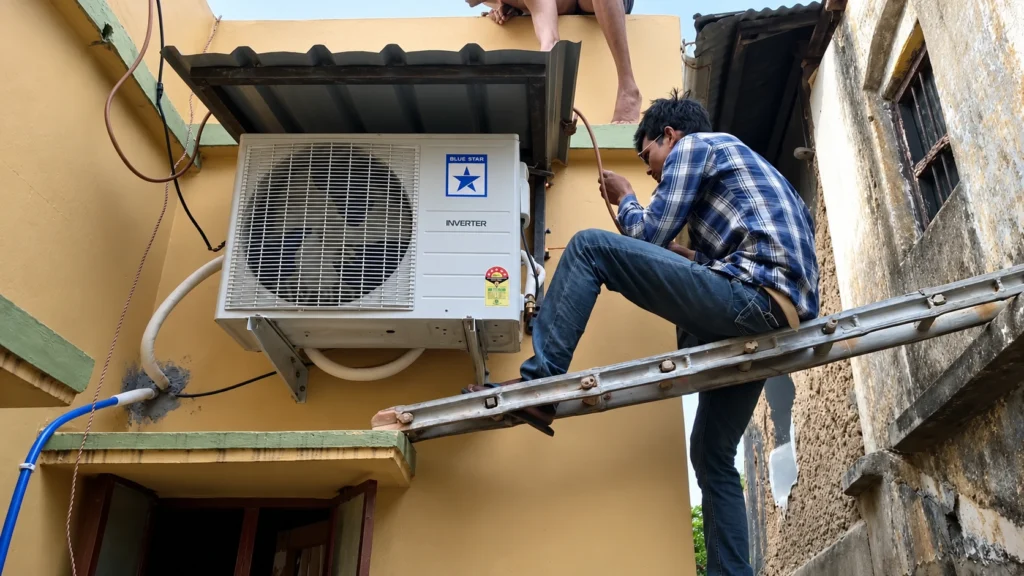
Use a breathable, weather-resistant AC cover instead of a plastic one, since plastic traps moisture and worsens rust. Cover the unit during storms or the off-season, but always remove it before running the AC.
Choose AC Models with Anti-Corrosion Coating
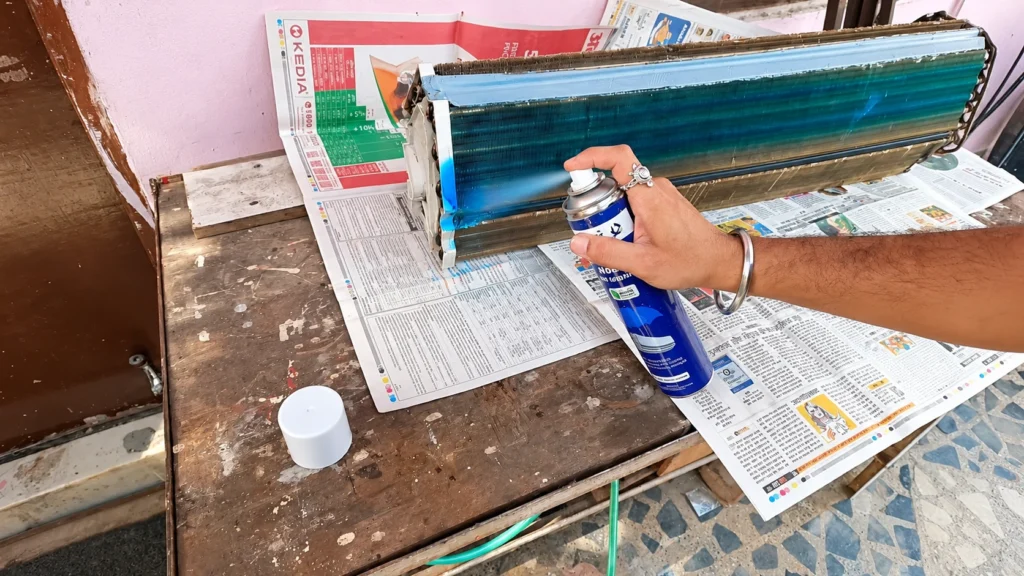
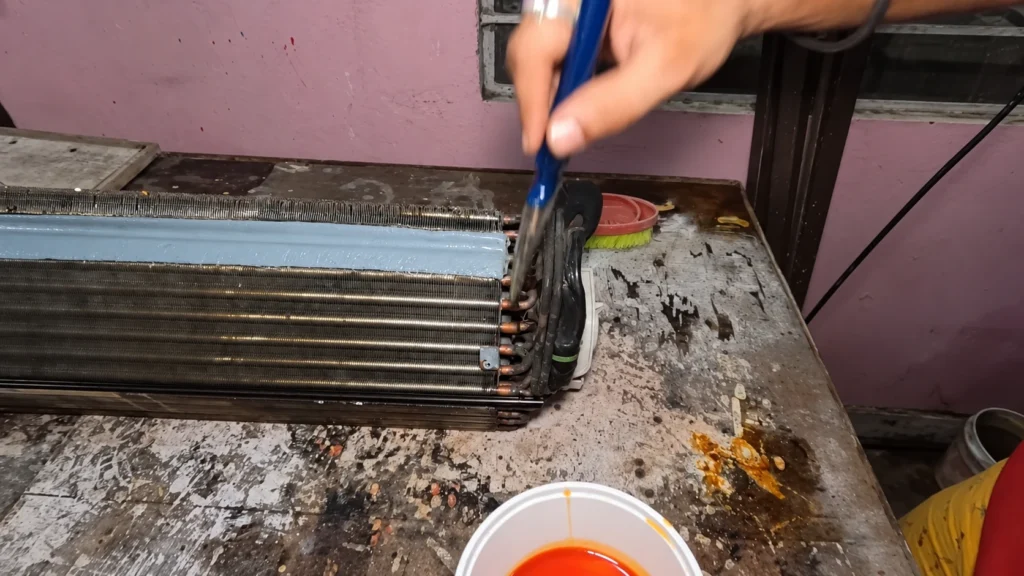
Protective fin coatings help water slide off fins quickly instead of sitting on them, which reduces rust formation and improves durability. Several coating types are used across AC models today:
- Blue Fin coating – A basic epoxy/acrylic anti-corrosion coating common in budget ACs; helps reduce dust sticking and corrosion, though less effective than premium options
- Gold Fin coating – Offers better water-repelling capability and durability, found in many premium AC models
- Ocean Black Protection / DuraFin Ultra – Premium, multi-layer coatings with better durability in humid or coastal conditions
- Transparent epoxy coating – A clear protective layer used on exposed metal parts
These coatings reduce corrosion but don’t eliminate the need for regular maintenance.
Do’s and Don’ts Table for Rust Prevention
| Do | Don’t |
|---|---|
| Clean coils and outdoor unit regularly | Use harsh chemical cleaners on coils |
| Apply anti-rust coating every 12–18 months | Leave scratches or exposed metal untreated |
| Use petroleum jelly on flare nuts | Use plastic covers that trap moisture |
| Ensure proper drainage/tilt of outdoor unit | Ignore standing water near the unit |
| Schedule annual professional servicing | Delay repairs once rust is spotted |
| Choose anti-corrosion coated models in coastal areas | Assume light rust will fix itself |
How to Fix Rust That Has Already Formed?
If rust has already started, follow these steps carefully:
- Turn off the power supply before touching the unit. This is the most important safety step.
- Gently clean rusted surfaces with a soft brush and mild detergent.
- Avoid strong chemicals or high-pressure sprays that can damage delicate parts.
- For light corrosion, use fine-grit sandpaper to remove rust without harming the metal underneath. Wipe away all debris afterward.
- Apply a rust converter or anti-corrosion spray to stop the rust from spreading.
- Follow up with protective outdoor paint or a specialized AC coating.
Stop and call a professional if: condenser coils, panels, or screws are heavily corroded, or if rust appears near gas joints or flare nuts. These areas carry a risk of refrigerant leakage and need expert handling.
When to Call a Professional Technician?

While minor rust can be handled with DIY care, some situations need expert attention right away:
If your AC is also showing a blinking light or error code, check it with our AC Error Code Finder or explore our other free appliance tools.
Urban Service Plaza, an ISO 9001:2015 certified organization, offers doorstep AC inspection and servicing across all PIN code areas in Kolkata. Call 9831015086 to book a technician and get your AC checked before rust causes bigger damage.
Quick Checklist: Seasonal Rust-Prevention Routine
Every month:
- Clean or check air filters
- Wipe visible dust off the outdoor unit
Every 3–6 months:
- Check nuts, valves, and joints for early rust
- Clear standing water and debris around the outdoor unit
- Inspect the drain line for blockages
Every 12–18 months:
- Reapply anti-rust coating or lacquer on exposed metal
- Repaint the outdoor stand if primer is worn
- Schedule professional deep servicing and inspection
Final Thought
AC rusting is a preventable problem when you stay on top of regular cleaning, proper drainage, and timely anti-rust coating. Small habits, done consistently, keep corrosion from taking hold.
Ignoring rust near gas joints or the outdoor stand can quickly turn into a safety hazard or a cooling problem. Inspect your outdoor unit each season, and get professional servicing at least once a year. For doorstep AC inspection and servicing in Kolkata, Urban Service Plaza is ready to help.


