 Call Technician

TCL AC Error Codes & Troubleshooting Guide (Split & Window AC)
Fix TCL split & window AC error codes fast. Learn causes, DIY checks & when to call a technician. Based on official TCL manuals for Indian users.
TCL AC Error Code Lookup
Type your error code below to see what it means and the quick fix to try.
TL;DR: Common Causes of TCL AC Error Codes
Quick Find Your TCL AC Error Codes
| Code | Fault |
|---|---|
| E1 | Indoor temperature sensor fault |
| E2 | Indoor pipe temperature sensor fault |
| E3 | Outdoor pipe temperature sensor fault |
| E4 | Refrigerant system leakage or fault |
| E6 | Malfunction of indoor fan motor |
| E7 | Outdoor air temperature sensor fault |
| E8 | Outdoor discharge temperature sensor fault |
| E9 | Outdoor IPM module fault |
| ER | Outdoor current detect fault |
| EE | Outdoor PCB EEPROM fault |
| EF | Outdoor fan motor fault |
| EH | Outdoor suction temperature sensor fault |
Hire Our Expert TCL AC Technician for Same Day Home Service in Kolkata
TCL split and window ACs display error codes to alert users about a specific fault, such as a faulty sensor, fan motor issue, or communication problem between the indoor and outdoor units. Understanding these codes helps you spot the exact problem quickly.
There is a difference between error codes and protection codes. Error codes point to an actual component fault, like a sensor or fan motor issue. Protection codes appear when the AC shuts down safely to prevent damage, often due to voltage issues or overheating.
This guide covers TCL split and window AC models sold in India. It is based on official TCL user manuals and explains each code in simple terms, so you can troubleshoot safely before calling a technician.

Urban Service Plaza is the best TCL AC service centre for out of warranty products. We’re not authorized but provide service with guarantee and genuine spare parts with bill.
TCL AC Error Code Explanation With Possible Solutions
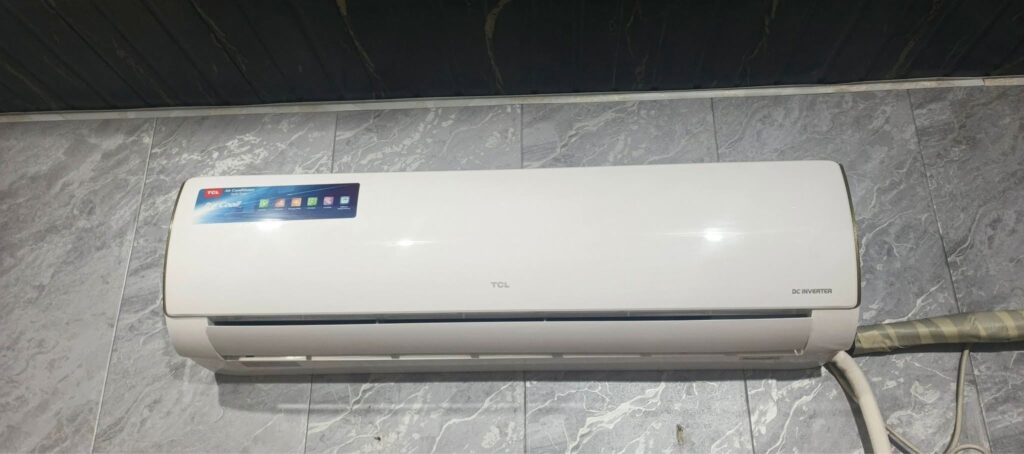
TCL split ACs display these fault codes on the indoor unit when the control board detects a problem. Below is what each code means and how you can approach fixing it.
E1 – Indoor Temperature Sensor Fault
What Causes This Error: The room temperature sensor near the indoor coil is damaged, dislodged from its correct position, or has a loose wire connection, so the PCB gets wrong temperature data.
How to Fix The Error: Turn off the AC and check whether the sensor is properly positioned and its connector is tight; if the sensor tests faulty with a multimeter, a technician should replace it.
E2 – Indoor Pipe Temperature Sensor Fault
What Causes This Error: The coil sensor on the indoor evaporator pipe has failed or lost contact, which can also happen due to ice formation or a loose sensor jack.
How to Fix The Error: Check the sensor’s resistance value with a multimeter in hot and cold water; replace it if the reading does not change smoothly, and ensure the connector is clean and secure.
E3 – Outdoor Pipe Temperature Sensor Fault
What Causes This Error: The outdoor coil sensor that monitors condenser pipe temperature is damaged, disconnected, or giving inconsistent resistance readings.
How to Fix The Error: A technician should test the outdoor pipe sensor’s resistance and replace it if faulty, and also check the wiring between the outdoor unit and PCB for looseness.
E4 – Refrigerant System Leakage or Fault
What Causes This Error: This code appears when the refrigerant level drops due to a gas leak, or when a blockage in the capillary tube or filter drier restricts refrigerant flow.
How to Fix The Error: A technician needs to locate the leak using a soap solution or electronic leak detector, repair the leak point, vacuum the system, and recharge refrigerant to the correct pressure.
E6 – Malfunction of Indoor Fan Motor
What Causes This Error: The indoor blower motor may have a weak or faulty capacitor, jammed bearings, burnt winding, or a PCB fault that prevents proper fan operation.
How to Fix The Error: Check if the blower rotates freely by hand, test the capacitor and replace it if weak, and have a technician inspect the motor winding or PCB if the fan still doesn’t start.
E7 – Outdoor Air Temperature Sensor Fault
What Causes This Error: The ambient sensor near the outdoor condenser has failed or is not detecting outside temperature correctly, which can also affect condenser fan speed control.
How to Fix The Error: Test the sensor’s resistance using a multimeter and compare readings against a healthy sensor; replace the sensor if the values don’t change with temperature.
E8 – Outdoor Discharge Temperature Sensor Fault
What Causes This Error: The discharge sensor on the compressor’s discharge pipe is faulty, which can trigger this code even if the compressor itself is healthy, especially under overheating conditions.
How to Fix The Error: A technician should check the discharge sensor’s resistance and wiring, and replace it if it fails to respond correctly to temperature changes.
E9 – Outdoor IPM Module Fault
What Causes This Error: The Intelligent Power Module (IPM) on the outdoor PCB has overheated or failed, often due to dry thermal paste, a loose heat sink, or a damaged PCB component.
How to Fix The Error: A technician should inspect the IPM module, reapply thermal paste, tighten the heat sink, and replace the module or PCB section if damaged.
ER – Outdoor Current Detect Fault
What Causes This Error: The outdoor PCB’s current detection circuit senses abnormal current draw, which can happen due to a compressor fault, wiring issue, or damaged PCB component.
How to Fix The Error: A technician should measure the compressor’s current draw and winding continuity, and inspect the PCB’s current sensing circuit for burnt or faulty parts.
EE – Outdoor PCB EEPROM Fault
What Causes This Error: The outdoor PCB’s memory chip (EEPROM) has corrupted data or failed, often due to voltage surges, moisture, or general component ageing.
How to Fix The Error: This usually requires a technician to reprogram or replace the outdoor PCB, since EEPROM faults are not user-fixable.
EF – Outdoor Fan Motor Fault
What Causes This Error: The outdoor fan motor is not spinning due to a weak capacitor, burnt winding, jammed blades, or a PCB relay problem.
How to Fix The Error: Check the capacitor value with a multimeter and replace it if weak; if the motor still doesn’t run, a technician should test motor continuity and inspect the PCB relay.
EH – Outdoor Suction Temperature Sensor Fault
What Causes This Error: The suction line sensor on the outdoor unit has failed or shows an inconsistent reading, which affects the compressor’s protection logic.
How to Fix The Error: A technician should test the suction sensor’s resistance and replace it if faulty, and verify the connector is properly seated on the outdoor PCB.
Reach out to Urban Service Plaza for same-day AC repair service in Kolkata and nearby areas. We offer doorstep repair and installation for all out-of-warranty AC brands, including TCL.
Find AC Error Codes & Troubleshooting of All Brands
Troubleshoot for Most Common TCL AC Problems
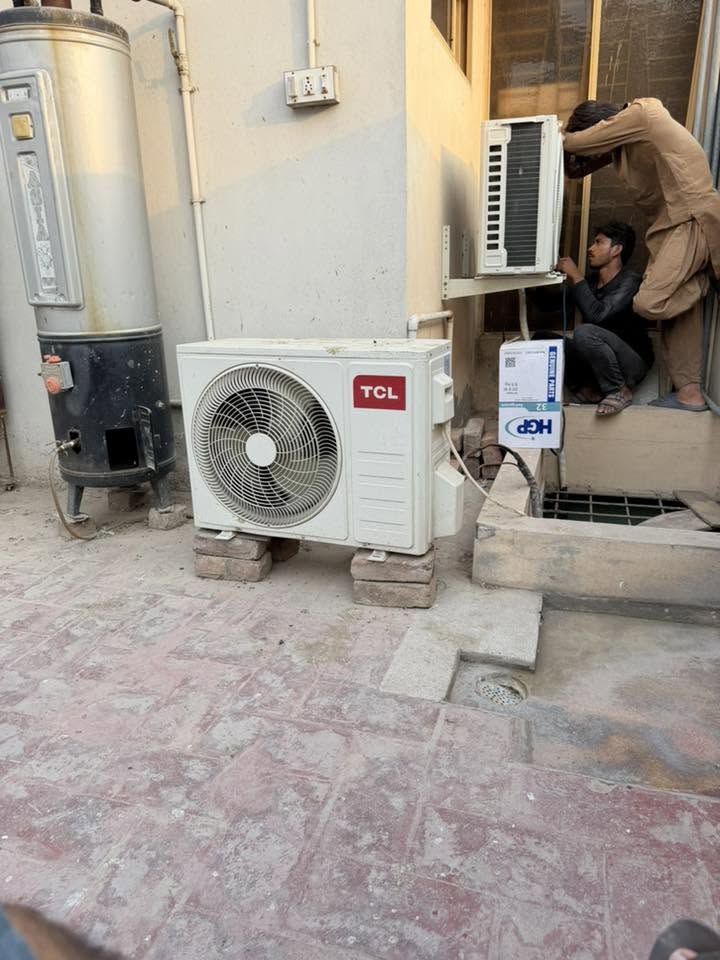
Before checking for error codes, some issues are simply normal operating behavior. Here’s what the official TCL manual says about common symptoms, along with practical fixes.
AC Has a Strange Odor
A dirty air filter is the main cause listed in the TCL manual, though dust buildup on the evaporator coil, a blocked drain tray, or mold growth inside the indoor unit can also produce bad smells. Clean or wash the air filter every 15–30 days, and if the smell continues, get the coil, blower, and drain line professionally deep-cleaned.
Running Water Sound Is Heard
This is caused by the backflow of liquid refrigerant inside the refrigerant circulation system as the AC starts, stops, or the compressor cycles. It is normal operation and does not need any fix; it’s simply the sound of refrigerant flowing through the pipes.
Fine Mist Comes From the Indoor Air Outlet
According to the manual, this happens when room air becomes very cold quickly, typically in Cooling or Dehumidifying/Dry mode, especially in high humidity conditions. No action is needed, as the mist usually disappears once the room temperature and humidity stabilize.
Cracking or Expansion Noise Is Heard
The TCL manual explains this noise comes from the expansion or contraction of the front panel plastic as it heats up or cools down. This is a normal sound and does not indicate a fault, so no repair is required.
Insufficient Cooling or Heating
The manual lists several reasons: an unsuitable temperature setting, blocked air intakes or outlets, a dirty filter, fan speed set too low, other heat sources in the room, or low refrigerant. Correct the temperature and fan speed settings, clean the air filter, and clear obstructions around the indoor and outdoor units; if cooling is still weak after these checks, ask a technician to inspect the refrigerant level for a possible leak.
AC Does Not Respond to Remote Control
The manual points to the remote being too far from the indoor unit, weak or dead batteries, or an obstacle blocking the signal path, while dust on the remote’s IR sensor or the indoor unit’s receiver can also weaken the signal. Replace the remote batteries, clean the sensor and receiver with a soft dry cloth, and stand within range with a clear line of sight to the indoor unit; if it still doesn’t respond, the receiver circuit inside the indoor unit may need a technician’s inspection.
Indoor Display Is Off
As per the manual, this can happen due to an active LIGHT function being turned off from the remote, or a power failure. Check whether the display or light setting was toggled off on the remote and confirm the AC is receiving power; if the display stays off despite normal power, a technician should check the display PCB.
AC Does Not Restart Immediately After Switching On
This is a built-in overload protection feature: when the AC is restarted immediately after being turned off, the protection switch delays compressor startup for about three minutes to protect the compressor. Simply wait a few minutes after switching the AC back on, and the compressor will start automatically once the protection delay ends.
Stop Using the AC Immediately and Disconnect the Power If
The TCL manual lists these as serious warning signs: uncommon noises during operation, a faulty electronic control board, faulty fuses or switches, water or objects spraying inside the appliance, overheated cables or plugs, or very strong smells coming from the unit. These can indicate a mechanical fault, an electrical short, or a fire hazard, so turn off the AC and disconnect the power supply at the mains immediately, then contact a qualified AC technician before using the unit again.
When to Call TCL Service Centre for Technician Visit?
TCL error codes and common malfunctions usually point to a specific, fixable issue. Many minor sounds or display quirks are normal, while codes like E4 or E9 need expert attention.
Use this guide to diagnose quickly and safely. For anything beyond basic checks, contact Urban Service Plaza’s trained technicians in Kolkata for prompt, reliable TCL AC repair.


![Gree AC Error Codes & Troubleshooting Guide [Error Finder Tool]](https://urbanserviceplaza.co.in/wp-content/uploads/2026/07/gree-ac-error-codes-1-768x432.png)


