 Call Technician

Panasonic AC Error Codes & Troubleshooting Guide [Free Tool]
Panasonic AC showing an error code? Check the full code chart, find causes fast & know if it’s DIY or needs a technician. Kolkata doorstep repair available.
If your Panasonic AC has stopped cooling and started flashing an LED or showing a code like E1, F3, or H11, you’re in the right place. This Panasonic AC error codes & troubleshooting guide helps you decode that signal fast. These codes point to specific parts, such as sensors, the PCB, the compressor, or the wiring between the indoor and outdoor units. However, a code doesn’t always confirm which exact part has failed.
This guide gives you a quick-reference table to spot your code instantly. You’ll also learn how to retrieve the stored error code using your remote, understand common codes with their causes and fixes, and know when a DIY step is safe versus when to call in an expert. If the problem needs professional hands, Urban Service Plaza offers doorstep AC repair across Kolkata to get your cooling back on track.

TL;DR:
Match your blinking LED pattern or displayed code below, then jump to that section.
Panasonic AC error code lookup
Type your error code below to see what it means and the quick fix to try.
Complete Panasonic AC Error Code Chart (Indoor & Outdoor Units)
Panasonic labels the same fault differently depending on model age. Use the table that matches your display.
Table 1: Indoor Unit Codes (Run LED / Timer LED Based)
| Error Code | LED Pattern (Run/Timer) | What It Means | Quick Fix Direction |
|---|---|---|---|
| E0 | Run: 1 flash, Timer: OFF | Indoor unit EEPROM parameter error | Call technician |
| E1 | Run: 2 flashes, Timer: OFF | Indoor/outdoor communication error | Check wiring/PCB |
| E2 | Run: 3 flashes, Timer: OFF | Zero-crossing signal detection error | Call technician |
| E3 | Run: 4 flashes, Timer: OFF | Indoor fan speed outside normal range | Check fan motor |
| E4 | Run: 5 flashes, Timer: OFF | Room temperature sensor (T1) fault | Check sensor wiring |
| E5 | Run: 6 flashes, Timer: OFF | Evaporator coil sensor (T2) fault | Check sensor wiring |
| EC | Run: 7 flashes, Timer: OFF | Refrigerant leakage detected | Call technician |
| F0 | Run: 1 flash, Timer: ON | Overload current protection | Clean filter/coil |
| F1 | Run: 2 flashes, Timer: ON | Outdoor ambient sensor (T4) fault | Check sensor wiring |
| F2 | Run: 3 flashes, Timer: ON | Condenser coil sensor (T3) fault | Check sensor wiring |
| F3 | Run: 4 flashes, Timer: ON | Compressor discharge sensor (TP) fault | Call technician |
| F4 | Run: 5 flashes, Timer: ON | Outdoor unit EEPROM parameter error | Call technician |
| P0 | Run: 1 flash, Timer: Flash | IPM/IGBT overcurrent protection | Call technician |
| P1 | Run: 2 flashes, Timer: Flash | Over-voltage or under-voltage protection | Check voltage supply |
| P2 | Run: 3 flashes, Timer: Flash | IPM module high temperature protection | Clean filter/coil |
| P4 | Run: 5 flashes, Timer: Flash | Inverter compressor drive error | Call technician |
Table 2: Newer Model / ODU Flash Codes
| ODU Flash Count | IDU Display Code | Fault | Quick Fix Direction |
|---|---|---|---|
| / | H00 | No fault | No action needed |
| 1 | E00 | Outdoor EEPROM fault | Call technician |
| 2 | H11 | Indoor to outdoor communication fault | Check wiring/PCB |
| 4 | F93 | Compressor starting abnormal | Call technician |
| 5 | F02 | Compressor out-of-step abnormal | Call technician |
| 6 | F03 | IPM module fault | Call technician |
| 7 | F04 | Compressor shell overheat protection | Clean filter/coil |
| 8 | H15 | Compressor discharge sensor fault | Check sensor wiring |
| 9 | F06 | Compressor suction sensor fault | Check sensor wiring |
| 10 | H28 | Outdoor condenser sensor fault | Check sensor wiring |
| 11 | H27 | Outdoor ambient sensor fault | Check sensor wiring |
| 12 | F09 | Outdoor DC fan motor fault | Check fan motor |
| / | E08 | Outdoor communication error | Check wiring/PCB |
| 13 | F98 | Outdoor AC current protection | Check voltage supply |
| 14 | F99 | Compressor phase current protection | Call technician |
| 15 | P02 | Outdoor AC voltage protection | Check voltage supply |
| 16 | P03 | Outdoor DC voltage protection | Check voltage supply |
| 17 | F96 | IPM overheat protection | Clean filter/coil |
| 18 | F97 | Compressor discharge overheat protection | Call technician |
| 19 | H99 | Indoor coil anti-freezing protection | Clean filter/coil |
| 20 | P07 | Outdoor coil overheat protection (cooling) | Clean filter/coil |
| 21 | P08 | Indoor coil overheat protection (heating) | Clean filter/coil |
| 22 | P09 | Outdoor ambient too low (cooling) | Call technician |
| 23 | PA | Outdoor ambient too high (heating) | Call technician |
| 25 | EE | Indoor unit EEPROM fault | Call technician |
| 26 | E01 | Indoor fan motor fault | Check fan motor |
| 27 | E02 | Indoor PCB zero-crossing fault | Call technician |
| 28 | H23 | Indoor evaporator sensor fault | Check sensor wiring |
| 29 | H14 | Indoor room temperature sensor fault | Check sensor wiring |

Hire Our Expert Gree AC Technician in Kolkata Without Advance Charges
How to Check Your Panasonic AC’s Error Code Using the Remote?
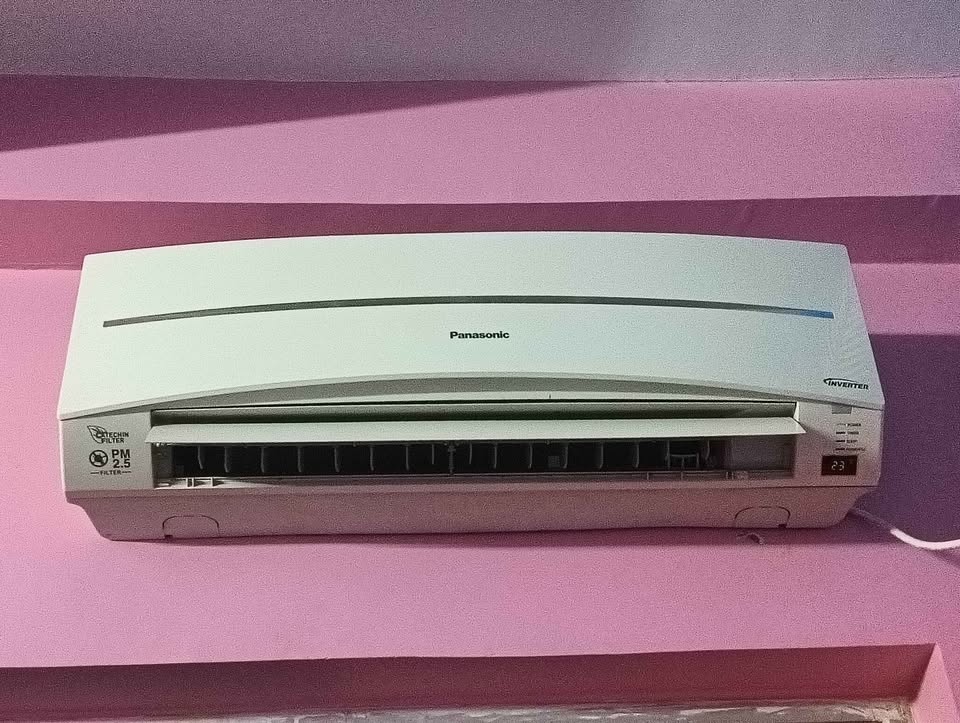
- Turn the AC off using the remote, but keep the main power supply on.
- Press and hold the CHECK (or CANCEL) button on the remote for about 5 seconds to enter error check mode.
- Press the ▲/▼ buttons (or TIMER ▲/▼) to scroll through the stored error codes.
- Watch for confirmation: the indoor unit beeps, typically 4 times, when it reaches the matching stored fault.
- Check the display for the matching error code once the beep sounds.
- Note that the Timer LED blinks continuously while the unit stays in error search mode.
Note: An error code only points to the affected component. It doesn’t always confirm the exact failed part. Multiple different faults can trigger the same code, so always confirm the real cause before replacing anything.
If you are not confident anough for fixing the Panasonic AC errors by yourself, immidiately contact Urban Service Plaza, the best AC repair service in Kolkata & nearby areas for out of warranty AC. No advance booking charges & 15 days service guarantee.
Top Panasonic AC Error Codes: Causes and Step-by-Step Fixes
E0 – Indoor Unit EEPROM Parameter Error
Meaning: The indoor unit’s EEPROM parameter has failed. Run LED flashes once, Timer LED stays off.
Possible Causes:
- Corrupted EEPROM data
- Faulty indoor PCB
What to Do? Read the stored error code before disconnecting power. Check indoor PCB connectors. If the error remains, the PCB may need reprogramming or replacement by a technician.
E1 – Indoor/Outdoor Communication Error
Meaning: The indoor and outdoor units cannot communicate. Run LED flashes twice, Timer LED stays off.
Possible Causes:
- Loose or incorrect wiring between indoor and outdoor units
- Reversed communication wires during installation
- Damaged communication cable
- Loose terminal connections
- Outdoor or indoor PCB failure
- No power supply to the outdoor unit
What to Do? Verify wiring matches the installation diagram, check terminal screws are tight, measure communication voltage, inspect PCB connectors, and ensure the outdoor unit is receiving power. Communication errors are frequently caused by wiring mistakes rather than failed PCBs.
Inverter and Non-inverter AC PCB repair requires highly skilled and trained technician/service engineers. Contact us for low cost AC PCB repair service in Kolkata with service guarantee.
E2 – Zero-Crossing Signal Detection Error
Meaning: The unit cannot detect the zero-crossing signal used to sync power supply timing. Run LED flashes three times, Timer LED stays off.
Possible Causes:
- Wiring or power supply issue
- Faulty indoor PCB
What to Do? Check indoor and outdoor wiring, inspect terminal connections, and inspect PCB connectors. Verify incoming supply voltage before assuming a PCB fault.
E3 – Indoor Fan Speed Abnormal
Meaning: The indoor fan is operating outside its normal speed range. Run LED flashes four times, Timer LED stays off.
Possible Causes:
- Fan motor fault
- Blocked or restricted blower
What to Do? Check indoor and outdoor fan motors for proper operation. Clean filters and heat exchangers to remove airflow restrictions, and confirm all connectors are securely fitted.
E4 – Room Temperature Sensor (T1) Fault
Meaning: The indoor room temperature sensor T1 is open circuit or short circuit. Run LED flashes five times, Timer LED stays off.
Possible Causes:
- Open circuit
- Short circuit
- Loose or damaged sensor wiring
What to Do? Check sensors for proper resistance and inspect wiring. Temperature sensor errors are commonly due to open circuits, short circuits, or loose connectors.
E5 – Evaporator Coil Temperature Sensor (T2) Fault
Meaning: The evaporator coil temperature sensor T2 is open circuit or short circuit. Run LED flashes six times, Timer LED stays off.
Possible Causes:
- Open circuit
- Short circuit
- Loose or damaged sensor wiring
What to Do? Check sensor resistance, inspect wiring connections, and confirm the connector is securely fitted before replacing the sensor.
EC – Refrigerant Leakage Detected
Meaning: The unit has detected a refrigerant leak. Run LED flashes seven times, Timer LED stays off.
Possible Causes:
- Refrigerant leak in the system
What to Do? Measure refrigerant pressures and inspect for leaks. Never recharge refrigerant without first repairing any leaks.
Never try AC refrigerant gas filling by yourself. It requires technical expertise and specific equipments. Contact our expert technician for sameday low cost AC gas filling service in and around Kolkata region.
F0 – Overload Current Protection
Meaning: The unit has triggered overload current protection. Run LED flashes once, Timer LED stays on.
Possible Causes:
- Excess load on the compressor or system
- Restricted airflow causing overload
What to Do? Check for airflow restrictions and clean filters and heat exchangers. Verify incoming supply voltage and confirm compressor operation.
F1 – Outdoor Ambient Temperature Sensor (T4) Fault
Meaning: The outdoor ambient temperature sensor T4 is open circuit or short circuit. Run LED flashes twice, Timer LED stays on.
Possible Causes:
- Open circuit
- Short circuit
- Loose or damaged sensor wiring
What to Do? Check the sensor for proper resistance and inspect wiring connections. Replace the sensor if it fails the resistance test.
F2 – Condenser Coil Temperature Sensor (T3) Fault
Meaning: The condenser coil temperature sensor T3 is open circuit or short circuit. Run LED flashes three times, Timer LED stays on.
Possible Causes:
- Open circuit
- Short circuit
- Loose or damaged sensor wiring
What to Do? Check sensor resistance and inspect wiring connections at the condenser coil before replacing the part.
F3 – Compressor Discharge Temperature Sensor (TP) Fault
Meaning: The compressor discharge temperature sensor TP is open circuit or short circuit. Run LED flashes four times, Timer LED stays on.
Possible Causes:
- Open circuit
- Short circuit
- Loose or damaged sensor wiring
What to Do? Measure sensor resistance and inspect wiring connections. Verify compressor operation as part of the diagnosis.
F4 – Outdoor Unit EEPROM Parameter Error
Meaning: The outdoor unit’s EEPROM parameter has failed. Run LED flashes five times, Timer LED stays on.
Possible Causes:
- Corrupted EEPROM data
- Faulty outdoor PCB
What to Do? Inspect PCB connectors. Always verify the root cause before replacing expensive components such as the inverter PCB.
P0 – IPM Malfunction or IGBT Overcurrent Protection
Meaning: The IPM module has malfunctioned, or the IGBT has triggered overcurrent protection. Run LED flashes once, Timer LED flashes.
Possible Causes:
- IPM module fault
- IGBT overcurrent condition
What to Do? Verify incoming supply voltage and inspect PCB connectors. Protection codes often indicate abnormal operating conditions rather than permanent component failure, so confirm the root cause before replacing the IPM module.
P1 – Over Voltage or Under Voltage Protection
Meaning: The unit has detected voltage outside its safe operating range. Run LED flashes twice, Timer LED flashes.
Possible Causes:
- Over-voltage supply
- Under-voltage supply
What to Do? Verify incoming supply voltage is stable and within range before assuming a component fault.
P2 – High Temperature Protection of IPM Module
Meaning: The IPM module has overheated and triggered protection. Run LED flashes three times, Timer LED flashes.
Possible Causes:
- IPM module overheating
What to Do? Clean filters and heat exchangers to improve airflow and cooling around the module, and check for airflow restrictions.
P4 – Inverter Compressor Drive Error
Meaning: The inverter compressor drive circuit has an error. Run LED flashes five times, Timer LED flashes.
Possible Causes:
- Compressor drive fault
- IPM or inverter circuit issue
What to Do? Verify compressor operation and inspect PCB connectors. Confirm the root cause before replacing the compressor or inverter PCB, as these are expensive components.
H00 – No Fault
Meaning: No fault is present in the system.
Possible Causes:
- Not applicable; this code confirms normal operation
What to Do? No action needed.
E00 – Outdoor EEPROM Fault
Meaning: The outdoor unit’s EEPROM has failed (ODU flash count: 1).
Possible Causes:
- Corrupted EEPROM data
- Faulty outdoor PCB
What to Do? Inspect PCB connectors. Verify the root cause before replacing the outdoor PCB.
H11 – Indoor to Outdoor Communication Fault
Meaning: Communication between the indoor and outdoor units has failed (ODU flash count: 2).
Possible Causes:
- Loose or incorrect wiring between indoor and outdoor units
- Reversed communication wires during installation
- Damaged communication cable
- Loose terminal connections
- Outdoor PCB failure
- Indoor PCB failure
- No power supply to outdoor unit
What to Do? Verify wiring matches the installation diagram, check terminal screws are tight, measure communication voltage, inspect PCB connectors, and ensure the outdoor unit receives power. A common installation mistake is connecting the earth wire to the communication terminal or swapping communication wires. Correcting the wiring immediately clears the H11 error.
F93 – Compressor Starting Abnormal
Meaning: The compressor fails to start normally (ODU flash count: 4).
Possible Causes:
- Compressor start fault
What to Do? Verify compressor operation and check incoming supply voltage. Confirm root cause before replacing the compressor.
F02 – Compressor Out-of-Step Abnormal
Meaning: The compressor has lost synchronization during operation (ODU flash count: 5).
Possible Causes:
- Compressor drive fault
What to Do? Verify compressor operation and inspect PCB connectors related to the drive circuit.
F03 – IPM Module Fault
Meaning: The IPM module has failed (ODU flash count: 6).
Possible Causes:
- IPM module fault
What to Do? Inspect PCB connectors. Verify the root cause before replacing the IPM module, as it is an expensive component.
F04 – Compressor Shell Temperature Overheat Protection
Meaning: The compressor shell has overheated, triggering protection (ODU flash count: 7).
Possible Causes:
- Compressor overheating
What to Do? Check for airflow restrictions, clean filters and heat exchangers, and verify compressor operation.
H15 – Compressor Discharge Temperature Sensor Fault
Meaning: The compressor discharge temperature sensor has failed (ODU flash count: 8).
Possible Causes:
- Faulty compressor discharge temperature sensor
- Open circuit
- Short circuit
- Loose sensor connector
- Damaged wiring
What to Do? Measure sensor resistance, check connector seating, and inspect the wiring harness. Replace the sensor if defective.
F06 – Compressor Suction Temperature Sensor Fault
Meaning: The compressor suction temperature sensor has failed (ODU flash count: 9).
Possible Causes:
- Open circuit
- Short circuit
- Loose or damaged sensor wiring
What to Do? Check sensor resistance and inspect wiring connections before replacing the sensor.
H28 – Outdoor Condenser Temperature Sensor Fault
Meaning: The outdoor heat exchanger (condenser) temperature sensor has failed (ODU flash count: 10).
Possible Causes:
- Heat exchanger sensor failure
- Open circuit
- Short circuit
- Connector not seated properly
What to Do? Measure sensor resistance, check the sensor’s location on the condenser coil, and inspect wiring. Replace the sensor if necessary.
H27 – Outdoor Ambient Temperature Sensor Fault
Meaning: The outdoor ambient temperature sensor has failed (ODU flash count: 11).
Possible Causes:
- Failed outdoor ambient sensor
- Open circuit
- Short circuit
- Loose connector
What to Do? Measure sensor resistance and check wiring continuity. Replace the faulty sensor.
F09 – Outdoor DC Fan Motor Fault
Meaning: The outdoor DC fan motor has failed (ODU flash count: 12).
Possible Causes:
- Fan motor fault
What to Do? Check indoor and outdoor fan motors and confirm all connectors are securely fitted.
E08 – Outdoor Communication Error
Meaning: The outdoor unit is experiencing a communication error.
Possible Causes:
- Wiring fault between units
- Faulty outdoor PCB
What to Do? Check indoor and outdoor wiring, inspect terminal connections, and confirm the outdoor unit receives power.
F98 – Outdoor AC Current Protection
Meaning: The outdoor unit has triggered AC current protection (ODU flash count: 13).
Possible Causes:
- Abnormal AC current draw
What to Do? Verify incoming supply voltage and check for airflow restrictions affecting compressor load.
F99 – Compressor Phase Current Protection
Meaning: The compressor has triggered phase current protection (ODU flash count: 14).
Possible Causes:
- Abnormal compressor phase current
What to Do? Verify compressor operation and check incoming supply voltage before replacing components.
P02 – Outdoor Unit AC Voltage Protection
Meaning: The outdoor unit has detected AC voltage outside its safe range, either too high or too low (ODU flash count: 15).
Possible Causes:
- Over-high or over-low AC voltage supply
What to Do? Verify incoming supply voltage is stable and within range.
P03 – Outdoor Unit DC Voltage Protection
Meaning: The outdoor unit has detected DC voltage outside its safe range, either too high or too low (ODU flash count: 16).
Possible Causes:
- Over-high or over-low DC voltage
What to Do? Verify incoming supply voltage and inspect PCB connectors.
F96 – IPM Overheat Temperature Protection
Meaning: The IPM module has overheated (ODU flash count: 17).
Possible Causes:
- IPM module overheating
What to Do? Clean filters and heat exchangers to improve airflow and check for restrictions around the module.
F97 – Compressor Discharge Temperature Overheat Protection
Meaning: The compressor discharge temperature has exceeded its safe limit (ODU flash count: 18).
Possible Causes:
- Compressor discharge overheating
What to Do? Measure refrigerant pressures, check for airflow restrictions, and verify compressor operation.
H99 – Cooling Indoor Unit Coil Anti-Freezing Protection
Meaning: The indoor coil has triggered anti-freezing protection during cooling mode (ODU flash count: 19).
Possible Causes:
- Indoor coil freezing risk
What to Do? Check for airflow restrictions and clean filters and the evaporator coil.
P07 – Cooling Outdoor Coil Overheat Protection
Meaning: The outdoor coil has overheated during cooling mode (ODU flash count: 20).
Possible Causes:
- Outdoor coil overheating
What to Do? Clean filters and heat exchangers and check for airflow restrictions around the outdoor coil.
P08 – Heating Indoor Coil Overheat Protection
Meaning: The indoor coil has overheated during heating mode (ODU flash count: 21).
Possible Causes:
- Indoor coil overheating
What to Do? Check for airflow restrictions and clean filters and heat exchangers.
P09 – Cooling Outdoor Ambient Temperature Over-Low Protection
Meaning: The outdoor ambient temperature is too low for cooling mode operation (ODU flash count: 22).
Possible Causes:
- Outdoor ambient temperature below safe operating range
What to Do? Verify outdoor ambient temperature conditions. This protection code often indicates an abnormal operating condition rather than a permanent component failure.
PA – Heating Outdoor Ambient Temperature Over-High Protection
Meaning: The outdoor ambient temperature is too high for heating mode operation (ODU flash count: 23).
Possible Causes:
- Outdoor ambient temperature above safe operating range
What to Do? Verify outdoor ambient temperature conditions before assuming a component fault.
EE – Indoor Unit EEPROM Fault
Meaning: The indoor unit’s EEPROM has failed (ODU flash count: 25).
Possible Causes:
- Corrupted EEPROM data
- Faulty indoor PCB
What to Do? Inspect PCB connectors. Verify the root cause before replacing the indoor PCB.
E01 – Indoor Fan Motor Fault
Meaning: The indoor fan motor has failed (ODU flash count: 26).
Possible Causes:
- Fan motor fault
What to Do? Check indoor and outdoor fan motors and confirm all connectors are securely fitted.
E02 – Indoor PCB Zero-Crossing Fault
Meaning: The indoor PCB cannot detect the zero-crossing signal (ODU flash count: 27).
Possible Causes:
- Wiring or power supply issue
- Faulty indoor PCB
What to Do? Check indoor wiring and inspect PCB connectors. Verify incoming supply voltage before replacing the PCB.
H23 – Indoor Evaporator Temperature Sensor Fault
Meaning: The indoor evaporator temperature sensor has failed (ODU flash count: 28).
Possible Causes:
- Open circuit
- Short circuit
- Loose or damaged sensor wiring
What to Do? Check sensor resistance and inspect wiring connections before replacing the sensor.
H14 – Indoor Room Temperature Sensor Fault
Meaning: The indoor room temperature sensor has failed (ODU flash count: 29).
Possible Causes:
- Open circuit
- Short circuit
- Loose or damaged sensor wiring
What to Do? Check sensor resistance and inspect wiring connections. Temperature sensor errors are commonly due to open circuits, short circuits, or loose connectors.
What You Should Know Before Fixing a Panasonic AC Error Yourself?
| Don’t Assume / Don’t Do | Why It Matters |
|---|---|
| Never recharge refrigerant without repairing leaks first | Causes repeat failure and wastes gas and money |
| Don’t assume PCB failure from a communication error | Most communication errors are wiring mistakes, not failed boards |
| Don’t ignore loose connectors on temperature sensors | Open, short, or loose connections are the most common sensor-error cause |
| Don’t replace the compressor, inverter PCB, or IPM immediately | Confirm the root cause first, since these are expensive parts |
| Don’t panic over every P-series or F-series code | Many clear on their own and reflect abnormal operating conditions, not permanent damage |
Wrapping Up
Panasonic error codes fall into clear families: sensor faults, communication issues, refrigerant problems, and power or compressor protection. Checking the stored code via remote and matching it to the table above remains the fastest first step.
Some codes are safe to inspect at home, but refrigerant, PCB, and compressor-related codes call for a certified technician. If the error persists, Urban Service Plaza offers doorstep diagnosis and repair across Kolkata.


![Gree AC Error Codes & Troubleshooting Guide [Error Finder Tool]](https://urbanserviceplaza.co.in/wp-content/uploads/2026/07/gree-ac-error-codes-1-768x432.png)

