Call Technician

AC Smells Bad When Turned On? Causes, Quick Fixes & When to Call a Technician
AC giving off a bad smell? Find the exact cause in seconds with our smell-to-cause table, get step-by-step fixes, and know when to call a professional.

A bad smell from your air conditioner is one of the most common household complaints. It usually comes from dust, moisture, mold, or a blocked drainage system inside the unit. In some cases, though, an AC bad smell can point to a more serious electrical or refrigerant issue that needs urgent attention.
This article helps you tackle the problem step by step. You can quickly match your specific smell to its likely cause using a simple reference table. You will also find fast, safe DIY fixes to try at home, along with clear guidance on when to stop troubleshooting and call a professional technician instead.

Quick Answer: What’s That Smell?
Not sure where to start? Use this table to match your AC’s smell to its likely cause and the right first step.
| Smell Type | Likely Cause | What To Do |
|---|---|---|
| Musty/moldy, mainly on startup | Mold/moisture on dirty coil | Clean coil, filters, and blower |
| Sewer/rotten egg smell | Drain pipe connected without U-bend trap | Install U-bend, check drain routing |
| Sweet/chemical smell + weak cooling | Refrigerant leak | Turn off, call technician for leak check |
| Burning/electrical smell | Overheating wiring, capacitor, or PCB fault | Switch off AC immediately, call technician |
| Dirty socks/damp smell | Bacteria on evaporator coil | Deep clean coil and blower |
| Rotting/decaying smell | Dead insect or small animal inside unit | Inspect and remove, clean unit |
| Smell only after long idle period (first use) | Dust burning off on startup | Normal; monitor, should clear in minutes |
If your smell matches “burning” or “refrigerant,” skip to the safety section below before doing anything else.
TL;DR: Quick Fix Checklist
Common Causes of AC Bad Smell
Dirty Evaporator Coil and Blower Wheel
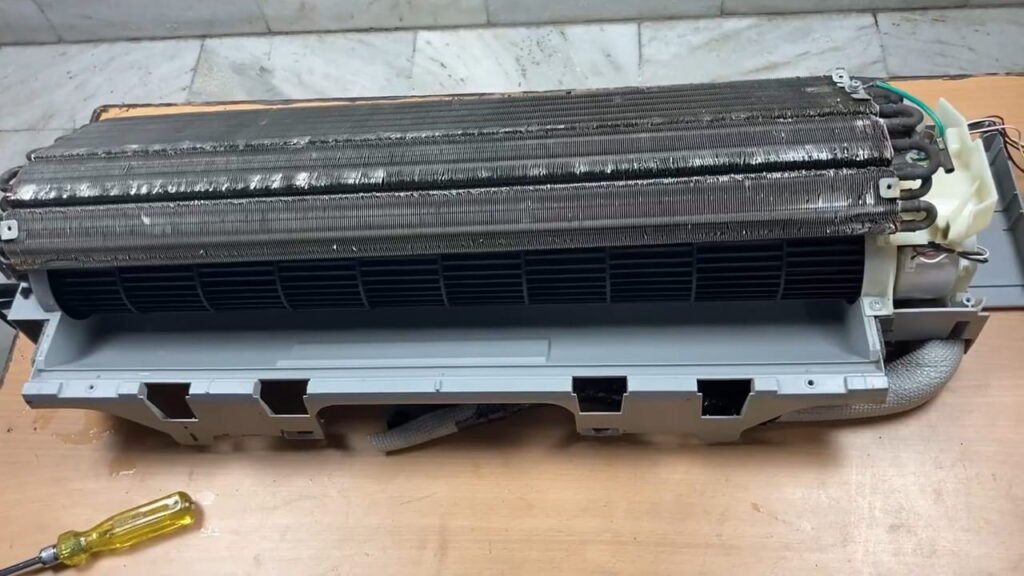
Dust, dirt, and moisture settle on the evaporator coil and blower wheel over time. This combination creates the perfect environment for bacteria and mold to grow. Once the AC starts running, the blower spreads this foul odor throughout the room.
Mold, Fungus, and Bacterial Growth
Moisture often stays on the coil and internal parts after each cooling cycle. If the unit is not cleaned regularly, this leftover moisture allows fungal and bacterial colonies to develop. The result is a musty, damp, or rotten smell every time the AC runs.
Dirty or Clogged Air Filters
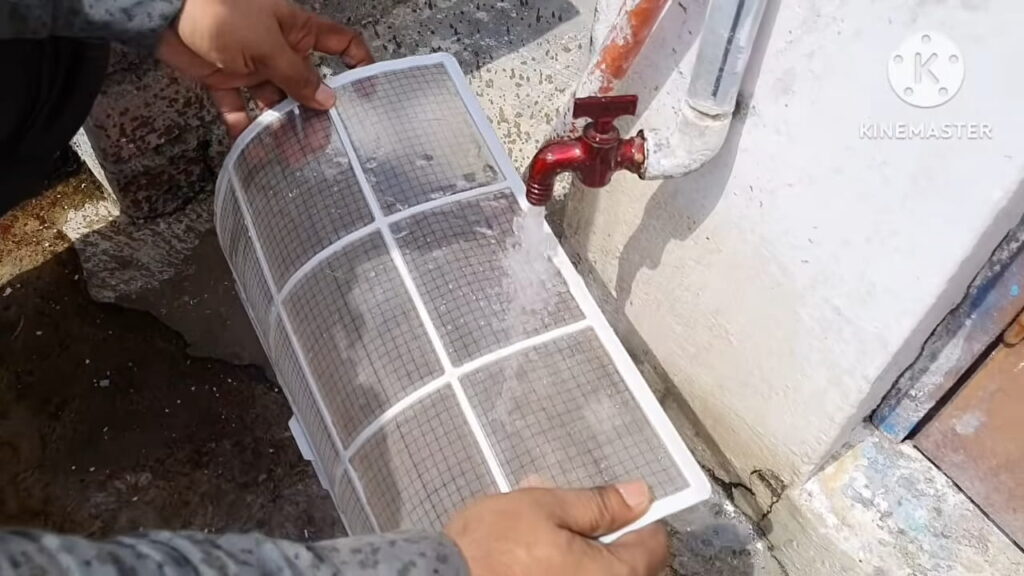
Air filters trap dust, smoke, pet hair, cooking odors, and other airborne particles. Over time, this accumulated debris starts to decompose and produce unpleasant smells. These odors then get recirculated back into the room with every cooling cycle.
Blocked or Dirty Drain Tray and Drain Line
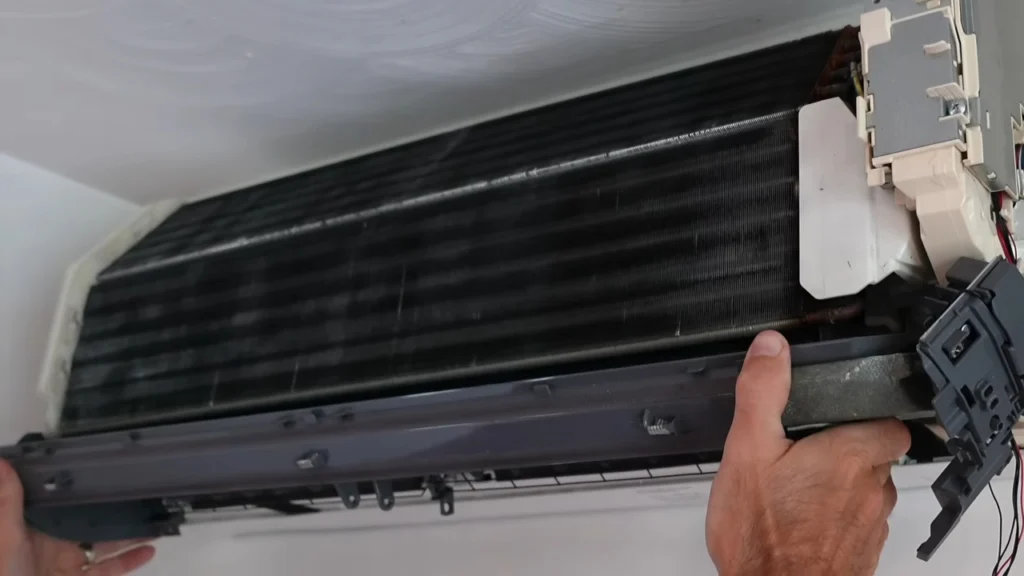
Condensed water normally flows out through the drain tray and drain pipe. When dirt or blockage stops this water from draining, it becomes stagnant. Stagnant water quickly turns into a source of foul odor and bacterial growth.
Drain Pipe Connected to Sewage Line
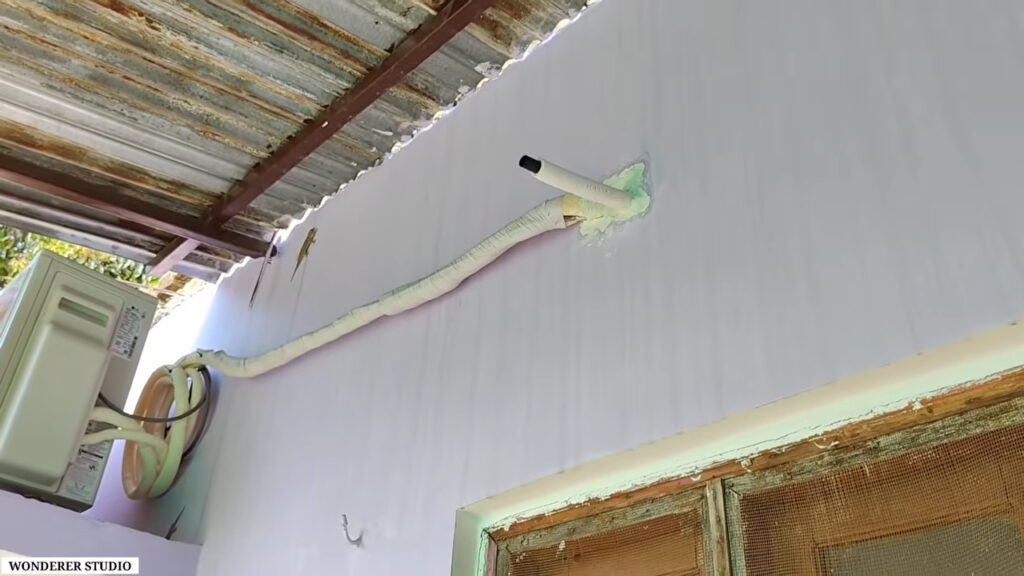
Some AC drain pipes connect directly to a drain or toilet line without a proper water trap, known as a U-bend. Without this trap, sewer gases can travel back through the drain pipe. The indoor unit then draws in these gases and spreads them into the room.
Room Odor Recirculation
Air conditioners mostly recirculate the air already inside the room rather than bringing in fresh air. This means odors from attached bathrooms, damp areas, or garbage get pulled in and circulated again and again. Over time, this makes the smell far more noticeable.
Dead Insects or Small Animals Inside Unit
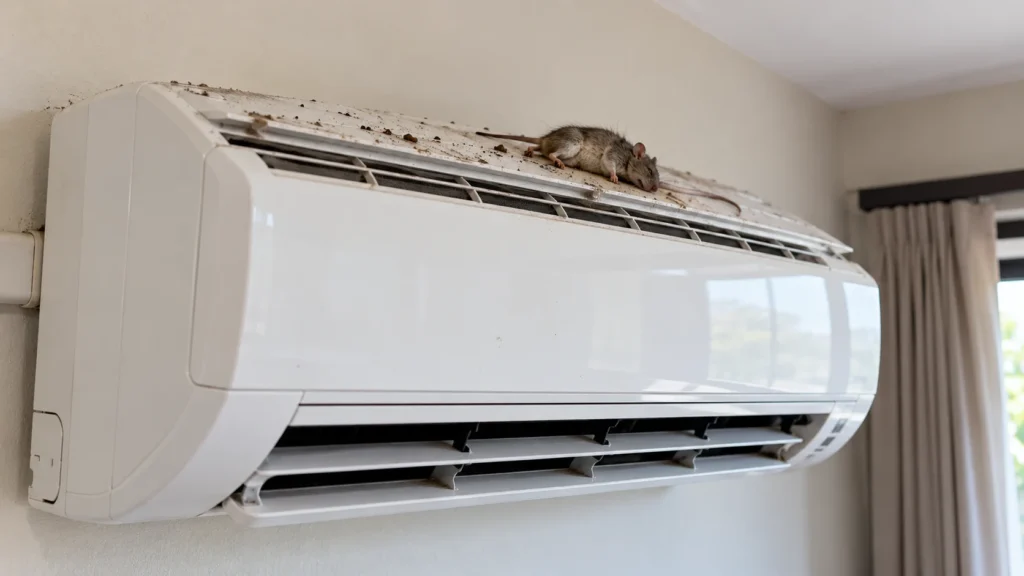
In rare cases, lizards, insects, mice, or other small creatures can enter the indoor unit or ducting. If they die inside, their decomposition produces a strong and unpleasant smell. This cause is uncommon but should not be ruled out during inspection.
Refrigerant Gas Leak
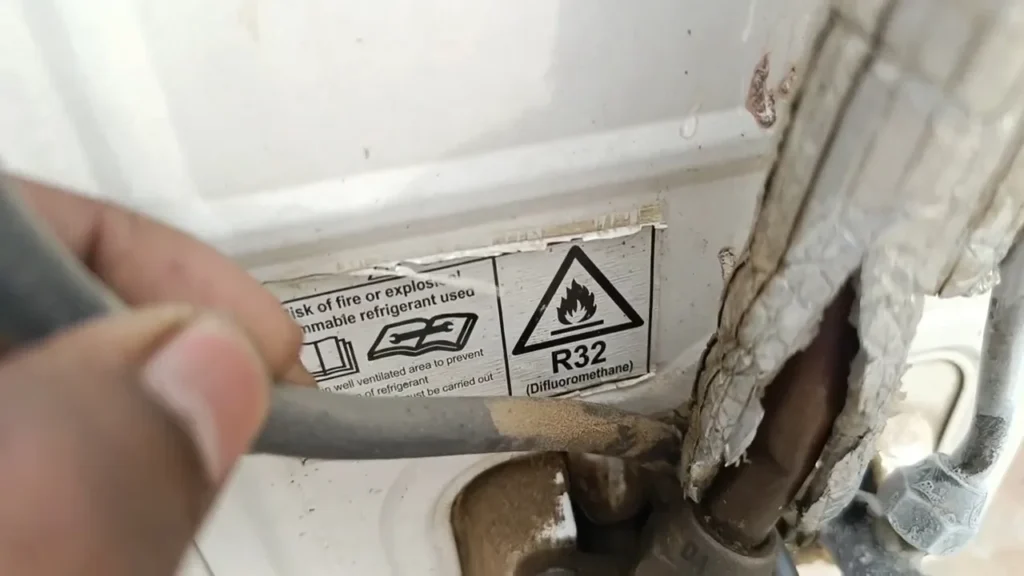
A leak in the evaporator coil can allow refrigerant gas to escape into the room. This escaping gas often produces an unusual smell that is different from typical mustiness. In such cases, cooling performance is usually reduced significantly or lost completely.
Burning Smell from Electrical Components
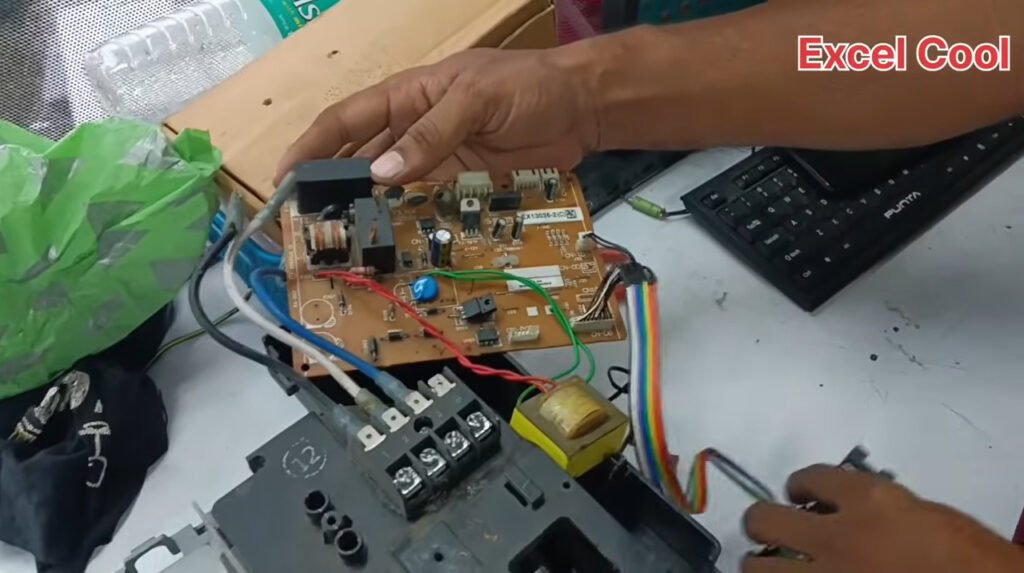
Short circuits, overheating wires, or damaged electrical components can create a distinct burning odor. This smell is different from musty or damp smells and points to a real safety risk. It requires immediate inspection and repair by a qualified technician.

AC Smelling Bad? Our Expert Technicians Can Fix This Today. Request A Visit Now!
Step-by-Step: How to Fix AC Bad Smell Problems
- Clean or replace your AC filters every 15 to 30 days to stop dust and debris from building up.
- Deep clean the evaporator coil, blower wheel, drain tray, drain pipe, and internal housing. Full-effect cleaning often needs professional tools.
- Check the drain line for blockages and confirm that water flows freely outside the unit.
- Install a proper U-bend or water trap if the drain pipe connects near a sewage or bathroom line.
- Remove any visible mold, fungus, or biological growth from internal parts of the unit.
- If the odor comes with poor cooling, get the system checked for a possible refrigerant leak.
- Inspect the unit for dead insects or small animals, and remove them if found.
- If you notice a burning smell, switch off the AC immediately and contact a technician. Do not attempt this step yourself.
If you notice any of these signs, it is best to bring in a professional. Urban Service Plaza offers doorstep AC repair, AC gas filling, AC installation and deep cleaning services across Kolkata, covering all PIN code areas in the region. As an ISO 9001:2015 certified organization with certified technicians, we help resolve stubborn odor problems safely and thoroughly. Call 9831015086 to book a service, Monday to Saturday, 10 AM to 7 PM.
Why Basic Cleaning Isn’t Always Enough?
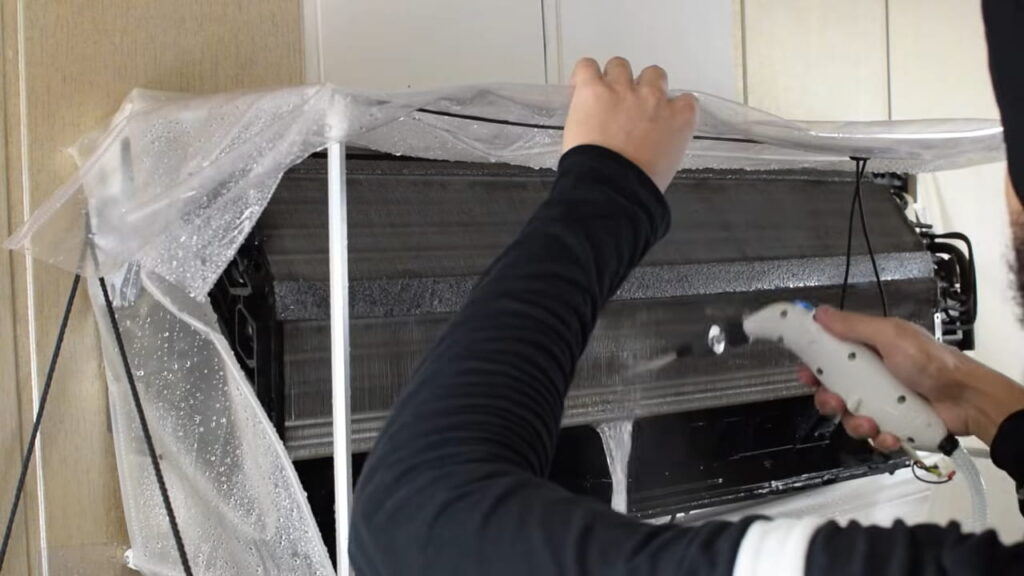
Basic water washing often isn’t enough to fully remove odor-causing buildup from an AC unit. Effective odor removal actually requires:
- Thorough coil cleaning
- Blower cleaning
- Drain tray cleaning
- Drain pipe cleaning
- Removal of accumulated slime, mold, and dirt
In severe cases, the indoor unit may need to be dismantled for complete cleaning.
Using the Auto Clean / Self Clean Feature
Many modern ACs come with an Auto Clean or Self Clean feature. This function keeps the indoor fan running for some time after the compressor stops, drying out moisture left on the evaporator coil and other internal parts. Regular use of this feature reduces:
Auto Clean helps prevent odor but does NOT replace regular servicing. It does not wash filters or remove dust buildup.
What You Should NOT Do
Health Risks of a Smelly AC
A smelly AC is not just unpleasant. It can also affect your health in several ways:
Children, elderly individuals, and people with respiratory conditions are particularly vulnerable to these effects.
Preventive Maintenance Tips
Regular upkeep keeps your AC smelling fresh and working efficiently. Here is a closer look at each preventive step.
Clean Filters Every 15–30 Days
Dust, dirt, and debris settle on air filters quickly, especially during heavy use. Cleaning filters every 15 to 30 days stops this buildup from decomposing and spreading odors through the room.
Use Auto Clean or Self Clean Regularly
If your AC has an Auto Clean or Self Clean feature, use it regularly. This function dries out moisture from the evaporator coil after each cooling cycle, which helps prevent mold and bacterial growth.
Get Professional Servicing at Least Once a Year
Basic cleaning at home cannot always reach the coil, blower, and drain tray thoroughly. A professional service, ideally once a year, ensures deep cleaning and helps catch odor-causing buildup early.
Ensure Proper Drainage and Pipe Routing
Check the drain pipe routing carefully at the time of installation. Proper slope and routing help condensate water flow out smoothly instead of collecting inside the unit.
Keep Nearby Bathrooms and Damp Areas Ventilated
Since ACs recirculate indoor air, poor ventilation near bathrooms or damp areas can add to the smell. Keeping these spaces well ventilated reduces the odors an AC might pull in and circulate.
Do Not Allow Water to Remain Stagnant
Stagnant water inside the drain tray or pipe becomes a breeding ground for bacteria and mold. Regularly check that water is not sitting stagnant anywhere in the drain system.
Operate the AC Periodically During Off-Seasons
Long idle periods allow moisture to build up inside the unit. Running the AC periodically, even during off-seasons, helps keep internal parts dry and prevents odor from developing.
Planning a new AC? Use our AC capacity finder to pick the right tonnage for your room, and our AC electricity bill calculator to estimate running costs.
When to Call a Professional AC Technician?
Some AC smell problems go beyond simple cleaning and need expert attention. Watch for these red flags:
- Burning or electrical smell of any strength
- Odor combined with reduced or lost cooling, which may point to a refrigerant leak
- Smell that persists even after cleaning the filter and coil
- A drain line that is inaccessible or has a severe blockage
- A suspected dead animal or insect that cannot be safely removed
- Sewage smell that continues even after checking the drain routing
AC Bad Smell Repair Cost Estimate
| Service Type | Estimated Cost Range (₹) |
|---|---|
| General AC service/deep cleaning (Split AC) | ₹499 – ₹899 |
| General AC service/deep cleaning (Window AC) | ₹399 – ₹699 |
| Drain line cleaning (part of deep cleaning service) | ₹499 – ₹899 |
| Gas leak check and refilling (Split AC) | ₹1,999 – ₹4,499 |
| Gas leak check and refilling (Window AC) | ₹1,499 – ₹3,499 |
| PCB/electrical repair | ₹899 – ₹2,999 |
Disclaimer: Prices vary by AC type, brand, and issue severity, and are approximate estimates for the Kolkata region only.
Conclusion
Identifying the smell type is the fastest way to find out what is really wrong with your AC. Most bad smell issues, whether from mold, dirty filters, or blocked drains, can be fixed with regular cleaning and proper maintenance.
However, burning or refrigerant-like smells are different. These need immediate attention from a trained technician, not a DIY fix. The practical takeaway is simple: consistent maintenance prevents most odor problems before they start. When DIY cleaning isn’t enough, Urban Service Plaza’s Kolkata-based technicians are ready to help with deep cleaning and repair.