Call Technician

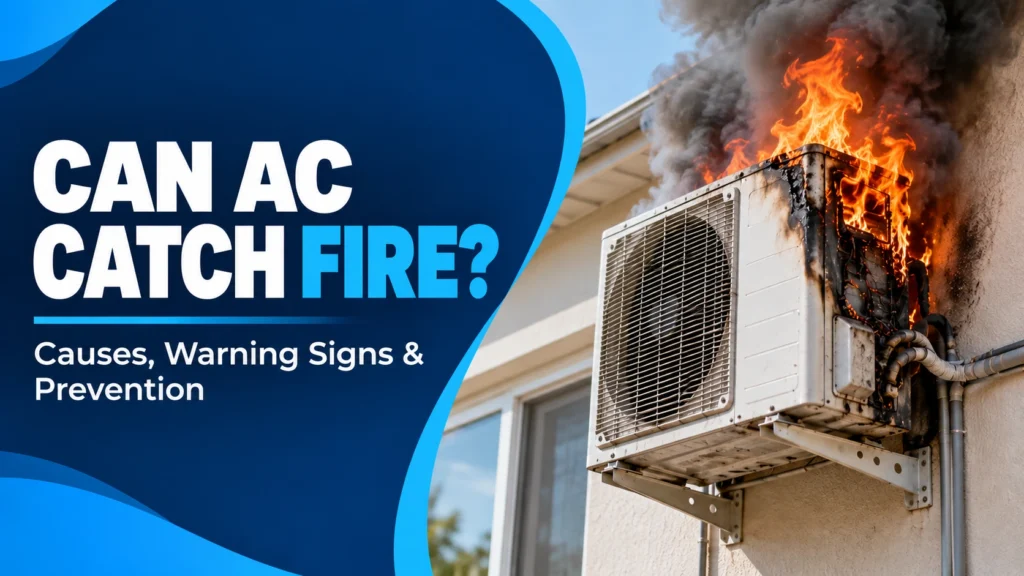
Can AC Catch Fire? Causes, Warning Signs & Prevention
Yes, ACs can catch fire. Learn the top causes, 7 warning signs to watch for, and simple steps to prevent AC fires at home. Read before your next service.
Why Does an AC Catch Fire? Quick Answers
Is Your AC a Fire Risk? Check These Signs Now
| Warning Sign | What It Means |
|---|---|
| Burning or electrical smell | Wiring or component overheating |
| Frequent MCB or circuit breaker tripping | Electrical overload or short circuit |
| Visible smoke or sparks | Immediate fire hazard, switch off now |
| Hissing sound | Possible refrigerant leak |
| Outdoor unit unusually hot | Overheating compressor or blocked airflow |
| Sudden drop in cooling | Blocked filter, gas leak, or compressor fault |
| Buzzing or crackling noise | Loose wiring or failing motor or capacitor |

AC Outdoor Not Working? Call AC Technician Today in Kolkata
Heatwaves push ACs to run for long hours, and AC fire incidents are rising across Indian summers. Reports also link thousands of residential fires each year to air conditioner malfunctions. So, why does AC catch fire, and is it avoidable?
In most cases, it is. Fires usually come from faulty wiring, overheating, and poor maintenance, not sudden random failure. This article covers common causes, early warning signs, step-by-step prevention, and what to do in an emergency.
How Do Air Conditioners Actually Catch Fire?
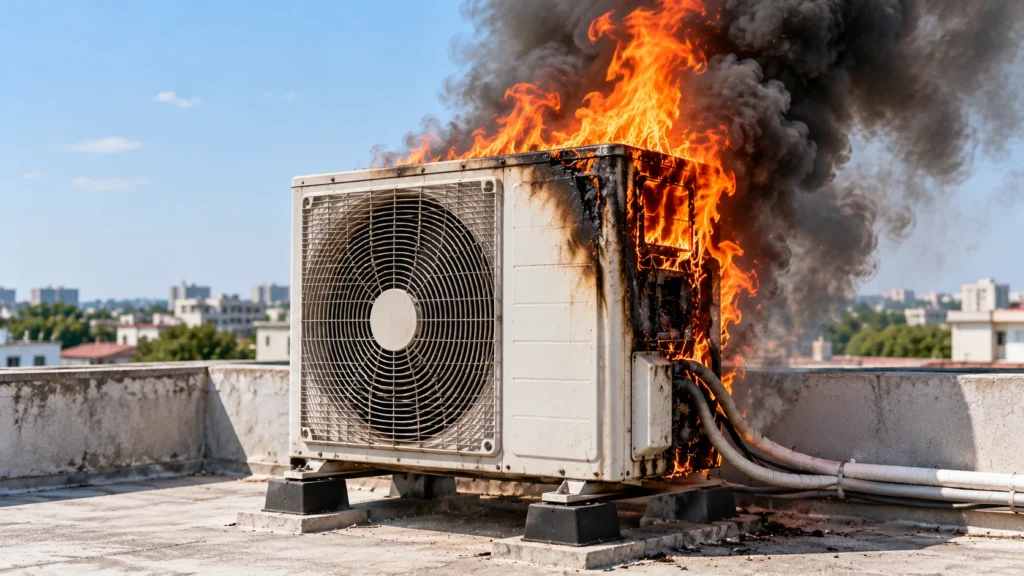
An AC creates heat while it cools a room. If that heat is not released properly, it builds up inside the parts. Over time, extreme heat wears down the wire insulation.
Once the insulation fails, bare wiring is exposed. This can cause a short circuit, which throws off sparks. The sparks can ignite dust, debris, or other nearby materials. Outdoor units usually just overheat. Indoor units carry a higher fire risk, because sparks inside them can ignite household materials.
Common Causes of AC Fires
- Electrical faults: Faulty wiring, loose connections, short circuits, and overloaded circuits can cause sparks. Voltage fluctuations, low-quality cables, and burnt contactors, capacitors, or terminals also raise the risk.
- Overheating from excessive use: Long hours of continuous use can overheat the compressor, fan motor, and capacitor. Setting 16°C forces the compressor to run non-stop.
- Dirty filters, coils, and blocked airflow: Dust restricts airflow, so the compressor works harder. Rising pressure and heat can lead to component failure.
- Refrigerant (gas) leaks: Leaked refrigerant becomes dangerous near sparks or electrical faults. Refrigerants such as R32 and R290 are mildly flammable and may raise fire risk under certain conditions.
- Poor maintenance: Long gaps between services let dirt, debris, and worn parts build up. This raises the chance of overheating and electrical failure.
- Faulty or worn-out components: Damaged capacitors, defective relays, failing fan motors, and aging compressors can become ignition sources. So can burnt terminals and connectors.
- Improper installation or repair work: Untrained technicians may use incorrect wiring, wrong refrigerant charging, or improper pressure settings. These errors raise fire risk.
- Insufficient ventilation around the outdoor unit: Enclosed spaces or blocked condensers trap heat. This raises the unit’s operating temperature.
- Rodents, birds, and debris: Rodents can damage insulation and wiring. Bird nests, cotton, and leaves near the outdoor unit can ignite from excess heat.
- Excessive electrical load: Running multiple ACs and heavy appliances together can overload household wiring. Old wiring may not handle modern electrical loads.
For same-day AC repair, AC gas filling and leak repair, and AC installation, contact Urban Service Plaza in Kolkata and nearby areas. We are an ISO-certified, government-registered organization, with service charges starting at ₹299.
Warning Signs Before an AC Fire
If you notice even one of these signs, stop using the AC and call a technician immediately.
How to Prevent AC Fires?
Prevention comes down to four areas: electrical safety, regular maintenance, installation and placement, and smart usage habits.
Electrical Safety
- Use dedicated power circuits for the AC so wiring is not overloaded.
- Avoid extension cords, multi-plug adapters, and overloaded sockets.
- Inspect wiring regularly and replace damaged, burnt, loose, or aging wires.
- Make sure the wiring is rated for the AC’s electrical load.
- Ensure proper earthing and grounding, and use a voltage stabilizer.
Regular Maintenance
- Schedule professional servicing regularly, especially before summer.
- Clean air filters regularly to keep airflow strong.
- Keep evaporator and condenser coils clean to avoid heat buildup.
- Check for refrigerant leaks during maintenance visits.
- Consider a professional electrical audit every few years.
Installation and Placement
- Keep the outdoor unit well ventilated with adequate clearance around it.
- Avoid blocked airflow and long exposure to intense sunlight.
- Remove leaves, paper, cloth, and bird nests near the outdoor unit.
- Protect wiring from rodents, which can damage insulation.
- Use only certified technicians for AC installation and repair.
Smart Usage Habits
- Maintain a temperature between 24°C and 26°C.
- Use Auto Mode when possible and keep doors and windows closed.
- Let the compressor cycle naturally instead of forcing continuous operation.
- Avoid setting the temperature extremely low, such as 16°C.
What to Do If You Suspect a Fire Risk?
- Switch off the AC immediately.
- Turn off the main power supply if it is safe to do so.
- Do not keep using the unit if you notice burning smells, smoke, sparks, or unusual noises.
- Contact a qualified AC technician for inspection.
- If a fire starts, evacuate the area immediately and contact emergency services.
Are Inverter ACs Safer Than Non-Inverter ACs?
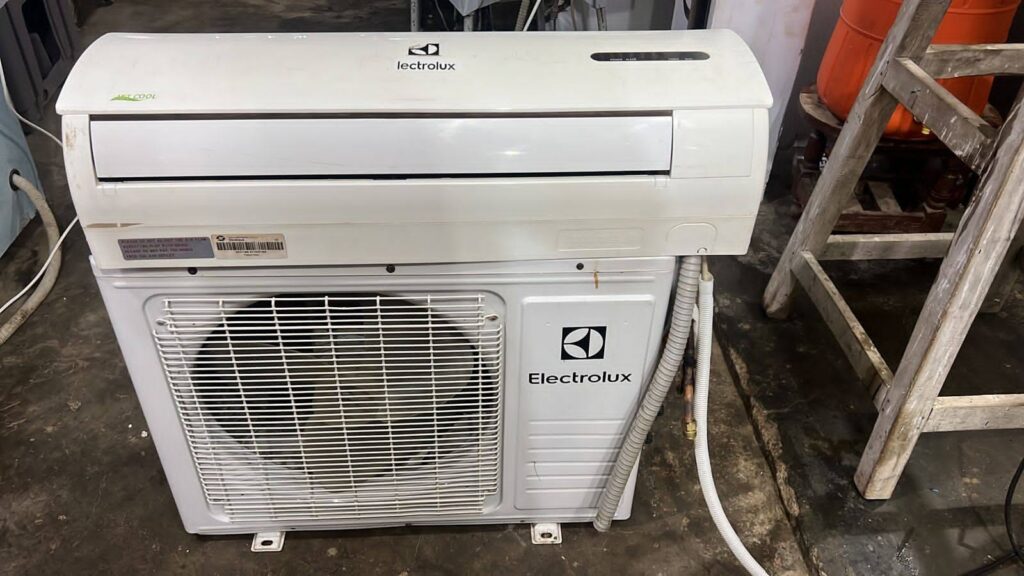
Inverter ACs are relatively safer than conventional models. Their compressors adjust speed gradually based on room temperature instead of switching fully on and off. This lowers stress on electrical components.
- Inverter AC: Changes compressor speed smoothly and uses less power during sustained operation.
- Non-inverter AC: Restarts the compressor at full speed each cycle, raising mechanical stress and overheating risk.
However, inverter ACs are not risk-free. Poor installation, electrical faults, voltage fluctuation, and lack of maintenance can still cause problems.
Final Thoughts
So, why does AC catch fire? Mostly because of preventable problems, not sudden random failure. These include neglected maintenance, overloaded electrical systems, poor wiring, blocked airflow, and prolonged overheating. Regular servicing, safe electrical practices, and quick attention to warning signs can greatly reduce the risk.
Staying ahead of problems is the safest approach. Schedule a professional AC safety check, especially before summer. Urban Service Plaza, a home appliance repair service in Kolkata, offers doorstep AC servicing by certified technicians to help keep your AC safe and running well.