 Call Technician

Lloyd AC Error Codes & Troubleshooting
Lloyd AC Error Code Finder Tool
Type your error code below to see what it means and the quick fix to try.
Lloyd air conditioners use built-in error codes to warn users when something goes wrong. Understanding Lloyd AC error codes helps you spot the exact fault quickly, whether it’s a sensor issue, fan fault, or compressor problem. Not every code means the same thing, though.
Error codes point to actual component failures, while protection codes appear when the AC shuts down parts of itself to prevent damage, such as during overheating or low refrigerant. This guide covers error codes for both Lloyd Split AC and Lloyd Window AC models sold in India.
Based on official Lloyd user manuals, it helps you diagnose common faults within minutes, so you know what’s wrong before calling a technician.

Lloyd Inverter Split AC Error Codes & Quick Solutions
| Error Codes & Meaning | Quick Solutions |
|---|---|
| EE – Indoor machine EE fault Indoor LED flashes: 25 | Power off for 5 minutes and restart. Call technician if it repeats. |
| E0 – Outdoor EE fault Indoor LED flashes: 1 | Restart the unit. Persistent fault needs PCB inspection. |
| E1 – Indoor fan fault Indoor LED flashes: 26 | Check indoor fan for obstruction. Restart AC. Call technician if code stays. |
| E2 – Indoor fan zero-crossing detection abnormal Indoor LED flashes: 27 | Restart AC after 5 minutes. Call technician if it repeats. |
| E3 – Indoor coil fault and sensor fault Indoor LED flashes: 28 | Turn off AC, wait, then restart. Sensor may need replacement. |
| E4 – Indoor ambient temperature sensor fault Indoor LED flashes: 29 | Restart AC. Get sensor checked if error returns. |
| E5 – Refrigerant leak fault (Optional) Indoor LED flashes: 30 | Do not keep restarting. Call technician to check for gas leak. |
| E6 – Indoor and outdoor communication fault Indoor LED flashes: 2 | Check wiring between units. Call technician for cable/PCB check. |
| E9 / EF – WiFi module fault (Optional) Indoor LED flashes: 3 | Restart AC and Wi-Fi router. Reconnect the app if needed. |
| EH – Humidity sensor fault (Optional) Indoor LED flashes: 24 | Restart AC. Call technician if error persists. |
| EP – PM2.5 sensor fault (Optional) Indoor LED flashes: 37 | Restart AC. Sensor replacement may be needed. |
| EU – Voice module communication fault (Optional) Indoor LED flashes: 38 | Restart AC. Call technician if issue continues. |
| LO/Lb – Low battery indication Indoor LED flashes: Not applicable | Replace remote batteries. |
| CL – Filter cleaning reminder (Optional) Indoor LED flashes: Not applicable | Clean the air filter, then reset as per manual. |
| go – Self-diagnosis test passed (Optional) Indoor LED flashes: Not applicable | No fault. Unit is working fine. |
| ng – Self-diagnosis test failed (Optional) Indoor LED flashes: Not applicable | Note the blink pattern shown and call a technician. |
| F1 – Compressor starting abnormal / phase failure Indoor LED flashes: 4 | Turn off AC and call a technician. Do not keep restarting. |
| F2 – Compressor out-of-step fault Indoor LED flashes: 5 | Switch off and call technician for compressor check. |
| F3 – IPM module fault Indoor LED flashes: 6 | Turn off AC immediately and call technician. |
| F4 – Compressor shell roof fault/protection Indoor LED flashes: 7 | Let unit cool down. Check outdoor unit ventilation. Call technician if repeated. |
| F5 – Discharge temperature sensor fault Indoor LED flashes: 8 | Restart AC. Technician visit needed if it recurs. |
| F6 – Suction temperature sensor fault (Optional) Indoor LED flashes: 9 | Restart AC. Get sensor tested by technician. |
| F7 – Outdoor coil temperature sensor fault Indoor LED flashes: 10 | Clean outdoor unit and restart. Call technician if unresolved. |
| F8 – Outdoor ambient temperature sensor fault Indoor LED flashes: 11 | Restart AC. Sensor replacement may be needed. |
| F9 – Outdoor DC fan fault (Optional) Indoor LED flashes: 12 | Check outdoor fan for blockage. Call technician if fan doesn’t spin. |
| P1 – Outdoor machine AC current protection Indoor LED flashes: 13 | Restart AC. Call technician if it trips again. |
| P2 – Compressor phase current protection Indoor LED flashes: 14 | Switch off and call technician. |
| P3 – Outdoor unit over-high/over-low AC voltage protection Indoor LED flashes: 15 | Check power supply and stabilizer. Call technician if unresolved. |
| P3 01 – Low voltage indication/notification Indoor LED flashes: Not applicable | Install or check voltage stabilizer. |
| P3 02 – High voltage indication/notification Indoor LED flashes: Not applicable | Check power supply for voltage spikes. Use a stabilizer. |
| P4 – DC voltage over-high or over-low protection Indoor LED flashes: 16 | Restart AC. Call technician if it recurs. |
| P5 – IPM over-high temperature protection Indoor LED flashes: 17 | Let unit cool. Check outdoor unit airflow and ventilation. |
| P6 – Discharge temperature overheat protection Indoor LED flashes: 18 | Turn off AC. Call technician to check refrigerant and compressor load. |
| P7 – Cooling indoor coil anti-freezing protection Indoor LED flashes: 19 | Check for ice on the coil. Clean or replace air filter. |
| P8 – Cooling outdoor coil overheat protection Indoor LED flashes: 20 | Clean outdoor coil and ensure proper airflow. |
| P9 – Heating indoor coil overheat protection (Optional) Indoor LED flashes: 21 | Restart AC. Call technician if it repeats in heat mode. |
| PC – Cooling outdoor ambient temperature over-low protection Indoor LED flashes: 22 | Normal in very cold outdoor conditions. Contact technician if persistent. |
| PH – Heating outdoor ambient temperature over-high protection (Optional) Indoor LED flashes: 23 | Normal in very hot outdoor conditions during heat mode. |
| PE – Earth fault protection Indoor LED flashes: Not applicable (Outdoor light flashes: 39) | Check earthing connection immediately. Call an electrician or technician. |
| L1 – Drive bus voltage over-high protection Indoor LED flashes: 31 | Check power supply. Call technician if it recurs. |
| L2 – Drive bus voltage over-low protection Indoor LED flashes: 32 | Check power supply and stabilizer. Call technician if unresolved. |
| L3 – Drive phase current overload fault Indoor LED flashes: 33 | Switch off AC. Call technician for compressor/PCB check. |
| L4 – Phase current sampling abnormal Indoor LED flashes: 34 | Restart AC. Call technician if it repeats. |
| Ht – Heat mode indication Indoor LED flashes: Not applicable | Normal indication. No action needed. |
| Do – Door open alert Indoor LED flashes: Not applicable | Close doors and windows properly to seal the room. |
Lloyd Fixed-Speed (Non-Inverter) Split AC Error Codes
| Error Codes & Meaning | Quick Solutions |
|---|---|
| E1 – Indoor side room temperature sensor fault Indoor LED flashes: 29 | Restart AC after 5 minutes. Call technician if it repeats. |
| E2 – Indoor side coil temperature sensor fault Indoor LED flashes: 28 | Check for ice on coil. Restart AC. Call technician if unresolved. |
| E5 / H6 – Indoor side fan motor fault Indoor LED flashes: 26 | Check indoor fan for obstruction. Call technician if fan doesn’t run. |
| dF – Indoor side defrost protection (cooling) Indoor LED flashes: 19 | Normal during high humidity or low coil temperature. No action needed. |
| E3 – Outdoor side coil temperature sensor fault (Optional) Indoor LED flashes: Not applicable | Clean outdoor unit and restart. Call technician if it persists. |
| HP – Heating indoor coil overheat protection (Optional) Indoor LED flashes: 21 | Restart AC. Call technician if it repeats in heat mode. |
| HF – Outdoor side defrost protection (heating) (Optional) Indoor LED flashes: Not applicable | Normal during heat mode in cold weather. No action needed. |
| Ht – Heat mode indication Indoor LED flashes: Not applicable | Normal indication. No action needed. |
| d0 – Door open alert Indoor LED flashes: Not applicable | Close doors and windows properly to seal the room. |
Note: Codes marked (Optional) apply only to selected Lloyd models with those features. Always cross-check with your specific unit’s manual.
Hire Our Expert AC Technician for Same Day Home Service in Kolkata
Lloyd AC Error Code Explanation With Possible Solutions
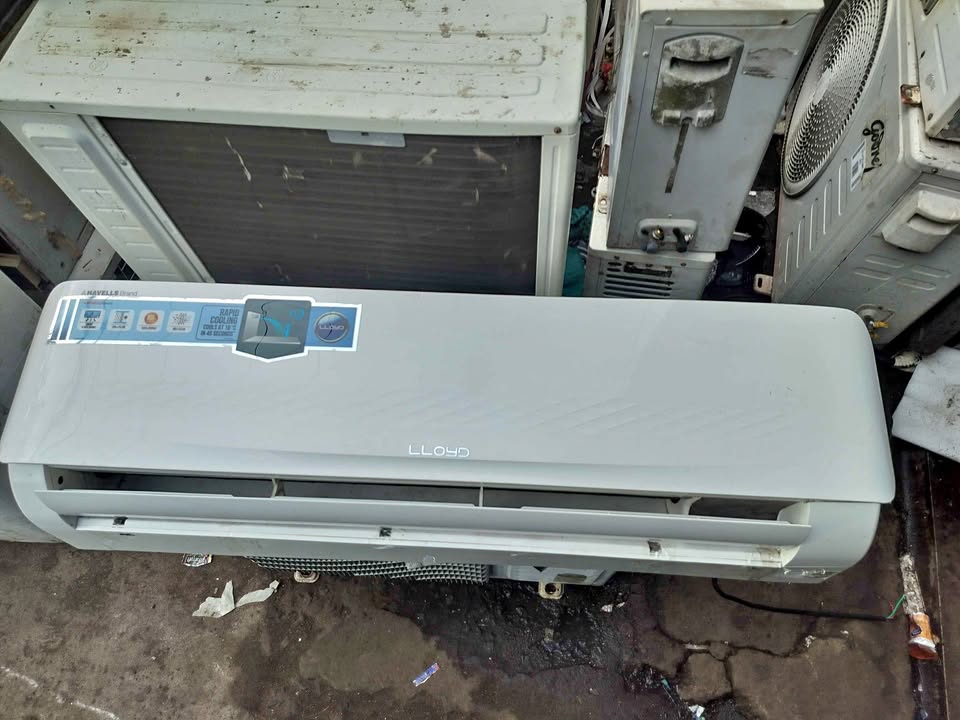
EE – Indoor machine EE fault (Indoor LED flashes: 25)
What Causes This Error: This fault happens when the indoor unit’s EEPROM, the memory chip that stores the PCB’s settings, fails to read or write data correctly, often due to a PCB defect or power fluctuation.
How to Fix The Error:
E0 – Outdoor EE fault (Indoor LED flashes: 1)
What Causes This Error: This is the same EEPROM memory fault as EE, but it occurs on the outdoor unit’s PCB instead of the indoor one.
How to Fix The Error:
E1 – Indoor fan fault (Indoor LED flashes: 26)
What Causes This Error: This code appears when the indoor blower fan fails to start or run at the correct speed, usually due to a weak capacitor, worn motor, dust buildup, or loose wiring.
How to Fix The Error:
E2 – Indoor fan zero-crossing detection abnormal (Indoor LED flashes: 27)
What Causes This Error: The PCB uses a zero-crossing signal to sync fan motor speed control, and this error means the PCB isn’t receiving that signal correctly, often pointing to a motor feedback or PCB issue.
How to Fix The Error:
E3 – Indoor coil fault and sensor fault (Indoor LED flashes: 28)
What Causes This Error: This occurs when the indoor coil temperature sensor is short-circuited or has an open connection, which can happen due to sensor damage, loose wiring, or excess moisture.
How to Fix The Error:
E4 – Indoor ambient temperature sensor fault (Indoor LED flashes: 29)
What Causes This Error: The room temperature sensor has failed or lost connection, so the PCB can’t correctly read the room’s temperature.
How to Fix The Error:
E5 – Refrigerant leak fault (Optional) (Indoor LED flashes: 30)
What Causes This Error: This fault triggers when the system detects refrigerant gas has dropped below the required level, usually from a leak in the copper pipes, joints, or coils.
How to Fix The Error:
E6 – Indoor and outdoor communication fault (Indoor LED flashes: 2)
What Causes This Error: This means the signal wire connecting the indoor and outdoor units isn’t transmitting properly, often due to loose wiring, a damaged cable, or a faulty PCB on either unit.
How to Fix The Error:
E9 / EF – WiFi module fault (Optional) (Indoor LED flashes: 3)
What Causes This Error: The AC’s built-in WiFi module has lost connection or failed to pair, which can happen due to router issues, weak signal, or a module fault.
How to Fix The Error:
EH – Humidity sensor fault (Optional) (Indoor LED flashes: 24)
What Causes This Error: The humidity sensor used for air quality monitoring has failed or lost its connection to the PCB.
How to Fix The Error:
EP – PM2.5 sensor fault (Optional) (Indoor LED flashes: 37)
What Causes This Error: The PM2.5 air quality sensor, which detects fine dust particles in the room, has malfunctioned or disconnected.
How to Fix The Error:
EU – Voice module communication fault (Optional) (Indoor LED flashes: 38)
What Causes This Error: The voice control module (used for Hello Lloyd voice commands) has failed to communicate with the main PCB.
How to Fix The Error:
LO/Lb – Low battery indication (Indoor LED flashes: Not applicable)
What Causes This Error: This message shows up on the remote handset itself, warning that the remote’s batteries are running low and can no longer send a strong signal to the AC.
How to Fix The Error:
CL – Filter cleaning reminder (Optional) (Indoor LED flashes: Not applicable)
What Causes This Error: This is not a fault but a maintenance reminder that appears after a set number of running hours, prompting you to clean the air filter for better airflow and efficiency.
How to Fix The Error:
go – Self-diagnosis test passed (Optional) (Indoor LED flashes: Not applicable)
What Causes This Error: This code appears when you run the Intelligent Diagnosis feature and the AC completes its internal self-check without finding any faults.
How to Fix The Error:
ng – Self-diagnosis test failed (Optional) (Indoor LED flashes: Not applicable)
What Causes This Error: This appears when the Intelligent Diagnosis self-test finds a fault in the system, and the indoor unit will then blink the Sleep LED to show the specific error code.
How to Fix The Error:
F1 – Compressor starting abnormal / phase failure (Indoor LED flashes: 4)
What Causes This Error: The compressor fails to start correctly, often due to phase failure, reversed wiring, low voltage, or a weak starting capacitor.
How to Fix The Error:
F2 – Compressor out-of-step fault (Indoor LED flashes: 5)
What Causes This Error: This happens when the compressor motor loses sync with the PCB’s control signal, often due to voltage fluctuation, a mechanical compressor issue, or a PCB fault.
How to Fix The Error:
F3 – IPM module fault (Indoor LED flashes: 6)
What Causes This Error: The IPM (Intelligent Power Module), which controls power to the compressor in inverter ACs, has overheated or failed, often due to dry thermal paste, a loose heat sink, or a PCB defect.
How to Fix The Error:
F4 – Compressor shell roof fault/protection (Indoor LED flashes: 7)
What Causes This Error: This protection trips when the compressor’s outer shell overheats, usually because of poor ventilation, high ambient temperature, or prolonged heavy load.
How to Fix The Error:
F5 – Discharge temperature sensor fault (Indoor LED flashes: 8)
What Causes This Error: The sensor that monitors the compressor’s hot discharge gas temperature has failed or lost connection, so the PCB can’t regulate compressor speed safely.
How to Fix The Error:
F6 – Suction temperature sensor fault (Optional) (Indoor LED flashes: 9)
What Causes This Error: The suction line sensor, which measures the refrigerant gas temperature entering the compressor, has malfunctioned or disconnected.
How to Fix The Error:
F7 – Outdoor coil temperature sensor fault (Indoor LED flashes: 10)
What Causes This Error: The sensor on the outdoor condenser coil has failed, often due to sensor damage, corrosion, or loose wiring, preventing accurate temperature readings.
How to Fix The Error:
F8 – Outdoor ambient temperature sensor fault (Indoor LED flashes: 11)
What Causes This Error: The sensor that reads outdoor air temperature has malfunctioned, which affects how the PCB controls fan speed and compressor operation.
How to Fix The Error:
F9 – Outdoor DC fan fault (Optional) (Indoor LED flashes: 12)
What Causes This Error: The outdoor unit’s DC fan motor has failed to start or run at the correct speed, often due to a jammed motor, damaged wiring, or a driver circuit fault on the PCB.
How to Fix The Error:
P1 – Outdoor machine AC current protection (Indoor LED flashes: 13)
What Causes This Error: This protection trips when the outdoor unit draws more electrical current than it should, often due to a compressor overload, dirty condenser coil, or wiring fault.
How to Fix The Error:
P2 – Compressor phase current protection (Indoor LED flashes: 14)
What Causes This Error: The compressor is pulling abnormal current on one of its phases, which usually points to a wiring fault, weak capacitor, or an internal compressor problem.
How to Fix The Error:
P3 – Outdoor unit over-high/over-low AC voltage protection (Indoor LED flashes: 15)
What Causes This Error: The outdoor unit has detected voltage outside its safe operating range, which can come from an unstable power supply, faulty stabilizer, or local grid fluctuations.
How to Fix The Error:
P3 01 – Low voltage indication/notification (Indoor LED flashes: Not applicable)
What Causes This Error: This sub-code specifically confirms that the voltage supplied to the AC has dropped below the safe operating range.
How to Fix The Error:
P3 02 – High voltage indication/notification (Indoor LED flashes: Not applicable)
What Causes This Error: This sub-code confirms the voltage supplied to the AC has risen above the safe operating range, often from grid spikes or an unstable connection.
How to Fix The Error:
P4 – DC voltage over-high or over-low protection (Indoor LED flashes: 16)
What Causes This Error: This relates to the internal DC bus voltage inside the inverter PCB going outside safe limits, often triggered by unstable AC input power or a PCB component fault.
How to Fix The Error:
P5 – IPM over-high temperature protection (Indoor LED flashes: 17)
What Causes This Error: The IPM (Intelligent Power Module) has overheated, usually because of poor outdoor unit ventilation, dust buildup, or a failing heat sink.
How to Fix The Error:
P6 – Discharge temperature overheat protection (Indoor LED flashes: 18)
What Causes This Error: The compressor’s discharge (outlet) gas temperature has exceeded safe limits, often due to low refrigerant, a blocked system, or excessive compressor load.
How to Fix The Error:
P7 – Cooling indoor coil anti-freezing protection (Indoor LED flashes: 19)
What Causes This Error: This protection activates when the indoor coil temperature drops too low and risks forming ice, usually caused by a dirty air filter, low airflow, or low refrigerant.
How to Fix The Error:
P8 – Cooling outdoor coil overheat protection (Indoor LED flashes: 20)
What Causes This Error: The outdoor condenser coil has overheated because it can’t release heat properly, often from dirt buildup, blocked airflow, or a weak outdoor fan.
How to Fix The Error:
P9 – Heating indoor coil overheat protection (Optional) (Indoor LED flashes: 21)
What Causes This Error: In heat mode, the indoor coil has become too hot, which can happen due to restricted airflow or a sensor misreading.
How to Fix The Error:
PC – Cooling outdoor ambient temperature over-low protection (Indoor LED flashes: 22)
What Causes This Error: This activates when the outdoor temperature is too low for the AC to run safely in cooling mode, which is a normal protective response in cold weather rather than a fault.
How to Fix The Error:
PH – Heating outdoor ambient temperature over-high protection (Optional) (Indoor LED flashes: 23)
What Causes This Error: This triggers when the outdoor temperature is too high for the AC to safely run in heat mode, which is a normal protective response rather than a fault.
How to Fix The Error:
Need your AC fixed without the wait? Urban Service Plaza is Kolkata’s trusted name for AC repair service on out-of-warranty appliances. Book our skilled technicians today for reliable, same-day doorstep repair.
PE – Earth fault protection (Indoor LED flashes: Not applicable, Outdoor light flashes: 39)
What Causes This Error: The AC has detected a problem with its earthing (grounding) connection, which is a serious electrical safety issue that can result from poor installation or damaged wiring.
How to Fix The Error:
L1 – Drive bus voltage over-high protection (Indoor LED flashes: 31)
What Causes This Error: The internal drive bus voltage inside the inverter PCB has risen above its safe limit, usually because of unstable or high input power supply reaching the outdoor unit.
How to Fix The Error:
L2 – Drive bus voltage over-low protection (Indoor LED flashes: 32)
What Causes This Error: The drive bus voltage has dropped too low, typically from an unstable power supply, weak stabilizer output, or low incoming voltage.
How to Fix The Error:
L3 – Drive phase current overload fault (Indoor LED flashes: 33)
What Causes This Error: The compressor’s drive circuit is drawing more current than it should on one phase, often pointing to compressor overload, wiring faults, or a failing PCB component.
How to Fix The Error:
L4 – Phase current sampling abnormal (Indoor LED flashes: 34)
What Causes This Error: The PCB’s current-sensing circuit is reading abnormal or inconsistent values, which usually indicates a fault in the sensing component or PCB itself.
How to Fix The Error:
Ht – Heat mode indication (Indoor LED flashes: Not applicable)
What Causes This Error: This isn’t a fault. It simply shows on the display to confirm the AC is currently running in Heat mode.
How to Fix The Error:
Do – Door open alert (Indoor LED flashes: Not applicable)
What Causes This Error: The AC’s door open detection feature senses that room temperature keeps rising continuously despite the compressor running, and interprets this as a door or window being left open, causing cooling loss.
How to Fix The Error:
Lloyd Fixed-Speed (Non-Inverter) Split AC Error Codes
E1 – Indoor side room temperature sensor fault (Indoor LED flashes: 29)
What Causes This Error: The room temperature sensor has short-circuited or lost connection, so the PCB can no longer accurately read the room’s temperature to control the compressor.
How to Fix The Error:
E2 – Indoor side coil temperature sensor fault (Indoor LED flashes: 28)
What Causes This Error: The evaporator coil sensor has failed or come loose, which can happen due to sensor wear, moisture damage, or a disconnected wire, and prevents the PCB from monitoring coil temperature properly.
How to Fix The Error:
E5 / H6 – Indoor side fan motor fault (Indoor LED flashes: 26)
What Causes This Error: The indoor blower fan has failed to start or run correctly, commonly due to a weak capacitor, worn motor bearings, dust buildup, or loose wiring.
How to Fix The Error:
dF – Indoor side defrost protection (cooling) (Indoor LED flashes: 19)
What Causes This Error: This isn’t a fault. It appears when the indoor coil temperature is very low along with high humidity, so the AC automatically runs a defrost cycle to clear frost from the coil.
How to Fix The Error:
E3 – Outdoor side coil temperature sensor fault (Optional) (Indoor LED flashes: Not applicable)
What Causes This Error: The outdoor condenser coil sensor has malfunctioned or disconnected, often due to corrosion, physical damage, or loose wiring at the outdoor unit.
How to Fix The Error:
HP – Heating indoor coil overheat protection (Optional) (Indoor LED flashes: 21)
What Causes This Error: In heat mode, the indoor coil has become too hot, usually from restricted airflow, a dirty filter, or blocked vents that trap heat inside the indoor unit.
How to Fix The Error:
HF – Outdoor side defrost protection (heating) (Optional) (Indoor LED flashes: Not applicable)
What Causes This Error: This isn’t a fault. It shows when frost builds up on the outdoor coil during heat mode in cold weather, and the AC runs a defrost cycle to clear the heat exchanger.
How to Fix The Error:
Ht – Heat mode indication (Indoor LED flashes: Not applicable)
What Causes This Error: This isn’t a fault. It’s a normal display indication confirming the AC is currently operating in Heat mode.
How to Fix The Error:
d0 – Door open alert (Indoor LED flashes: Not applicable)
What Causes This Error: The AC detects that room temperature keeps rising continuously even while running, and interprets this pattern as an open door or window causing cooling loss.
How to Fix The Error:
Read our detailed guide on AC maintenance tips with free checklist tool to keep your AC running without any issue for long time and save electricity cost.
Troubleshoot for Most Common Lloyd AC Problems
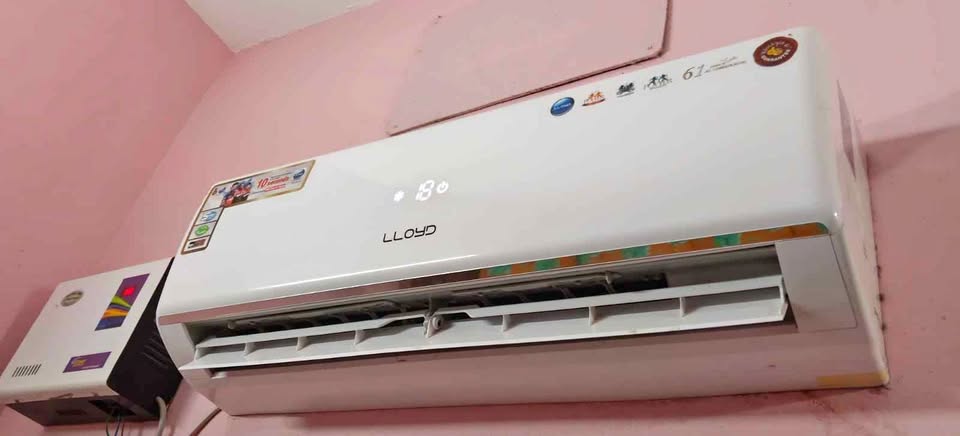
Air conditioner doesn’t operate
For your expired warranty Lloyd AC & other appliance repair contact Lloyd AC service centre in Kolkata for sameday doorstep repair service.
Indoor unit cannot receive remote controller signal / Remote controller doesn’t work
No air is emitted from the indoor unit
Mist comes out from the indoor unit air outlet
Set temperature cannot be adjusted
Cooling or heating performance is poor
Unpleasant odours are emitted
Air conditioner operates abnormally
Outdoor unit produces vapor
Water flowing sound
Cracking noise
When to Call Lloyd Service Centre for Technician Visit?
Lloyd AC error codes help you catch problems early, before they turn into major repairs. Start with simple fixes like a power reset, filter cleaning, or checking airflow.
Avoid repeated restarts if compressor, PCB, or voltage codes appear. If the same error returns, call Urban Service Plaza for expert diagnosis and repair.


