 Call Technician

LG AC Error Codes & Troubleshooting Guide [Error Finder]
Look up your LG AC error code instantly. Find what it means, DIY fixes, and when to call a technician. Complete CH/C-code and number code list.
Quick Answer
LG air conditioners display LG AC error codes whenever the system detects a problem with a sensor, PCB, compressor, fan, or the communication link between the indoor and outdoor units. Depending on your model, this shows up as a number (like 21 or 61), a CH/C-code (like CH01 or C5), or a blink pattern on the LED lights for units without a display screen.
Not every code means your AC is broken. Some, like P0 and LO, are normal operating states that need no action, while others call for an immediate power-off. This guide gives you an instant code lookup table, plain-English meanings for each fault, safe DIY checks you can try, and clear signals for when it’s time to call a professional.

Find LG AC Error Codes
Type your error code below to see what it means and the quick fix to try.
LG AC Error Code Chart: Find Your Code Fast
Use Ctrl+F (or Cmd+F on Mac) to search this page for your exact error code.
| Error Code | What It Means | DIY or Call Technician? |
|---|---|---|
| 21 | Compressor over current, IPM fault | Call Technician |
| 22 | Current over 14A (CT circuit) | Call Technician |
| 23 | DC link voltage low | Call Technician |
| 24 | Low/high pressure switch open | Call Technician |
| 25 | Abnormal AC voltage input | Call Technician |
| 26 | DC compressor position fault | Call Technician |
| 27 | PSC fault (reactor) | Call Technician |
| 28 | DC link voltage high | Call Technician |
| 29 | Compressor over current (30A+) | Call Technician |
| 32 | Discharge pipe temperature high (inverter) | Call Technician |
| 33 | Discharge pipe temperature high (compressor) | Call Technician |
| 39 | Communication error, PFC to inverter PCB | Call Technician |
| 40 | CT circuit malfunction | DIY Check |
| 41 | Discharge pipe sensor open/short (inverter) | DIY Check |
| 44 | Air sensor open/short | DIY Check |
| 45 | Condenser pipe sensor open/short | DIY Check |
| 46 | Suction pipe sensor open/short | DIY Check |
| 47 | Discharge pipe sensor open/short (compressor) | DIY Check |
| 48 | Discharge pipe and air sensor unplugged | DIY Check |
| 51 | Overload combination | Call Technician |
| 52 | Communication error, main to sub board | DIY Check |
| 53 | Communication error, indoor to outdoor | DIY Check |
| 54 | Reverse or missing phase, 3-phase supply | Call Technician |
| 60 | EEPROM checksum mismatch | Call Technician |
| 61 | Condenser pipe temperature too high | DIY Check |
| 62 | Heat sink temperature too high | Call Technician |
| 63 | Condenser pipe temperature too low | DIY Check |
| 65 | Heat sink sensor open/short | DIY Check |
| 67 | Outdoor BLDC fan lock | DIY Check |
| 73 | Inverter PFC input current over 48A | Call Technician |
| 105 | Communication error, main to fan board | DIY Check |
| CH01 / C1 | Indoor room temperature sensor fault | DIY Check |
| CH02 / C2 | Indoor coil (pipe) temperature sensor fault | DIY Check |
| CH03 | Indoor fan motor error | DIY Check |
| CH04 | Drain pump or water level error | DIY Check |
| CH05 / C5 / E53 / CH53 / CH93 | Indoor to outdoor communication error | DIY Check |
| CH06 | Indoor outlet pipe sensor fault | DIY Check |
| CH07 | Compressor over current | Call Technician |
| CH08 | Indoor fan connector error | DIY Check |
| CH09 / C9 | Outdoor fan motor error | DIY Check |
| CH21 | IPM or compressor over current | Call Technician |
| CH23 | Low or high DC link voltage | Call Technician |
| C6 / CH6 | Excessive current in DC power circuit | Call Technician |
| CH32 | High compressor discharge temperature | Call Technician |
| CH34 | High pressure protection | Call Technician |
| CH38 / P38 / 36 | Low refrigerant or gas leak | Call Technician |
| CH39 | Communication or PFC PCB error | Call Technician |
| CH40 | Current transformer (CT) circuit error | DIY Check |
| CH44 | Outdoor ambient temperature sensor fault | DIY Check |
| CH45 | Condenser pipe sensor fault | DIY Check |
| CH46 | Suction pipe sensor fault | DIY Check |
| CH47 | Discharge pipe sensor fault | DIY Check |
| CH51 | Discharge thermistor error | DIY Check |
| CH61 | Condenser temperature too high | DIY Check |
| CH62 | Heat sink temperature too high | Call Technician |
| CH63 | Condenser temperature too low | DIY Check |
| CH65 | Heat sink sensor open/short | DIY Check |
| CH67 | Outdoor fan lock | DIY Check |
| CC | EEPROM error | Call Technician |
| CD | Inverter module error | Call Technician |
| P0 | Power mode, not a fault | DIY Check |
| LO | Test mode, not a fault | DIY Check |
| P22 | Excessive compressor current | Call Technician |
| P26 | Inverter compressor speed error | Call Technician |

Schedule AC Technician Visit Today in Kolkata Without Any Service Charges
How LG ACs Show Error Codes?

LG air conditioners communicate faults in two ways, depending on the model.
Units with a digital display show the error directly as a number or CH/C-code on the indoor unit screen or wall controller. You simply read it and match it to the chart above.
Older or basic models without a display, common on outdoor units, use LED blink patterns instead. Two LEDs on the outdoor PCB, LED1 (red) and LED2 (green), blink in a sequence.
How to count blinks:
Always power-cycle the unit once, off for a few minutes then restart, to confirm the code is genuine and not a one-off glitch before starting repairs.
Most of the LG AC error code fixing requires technical expertise and tools. Contact Urban Service Plaza, the best AC service centre for out of warranty branded AC units for sameday and affordable home repair. 15 days service guarantee & no advance charges.
Common LG AC Error Codes Explained: Causes & Fixes
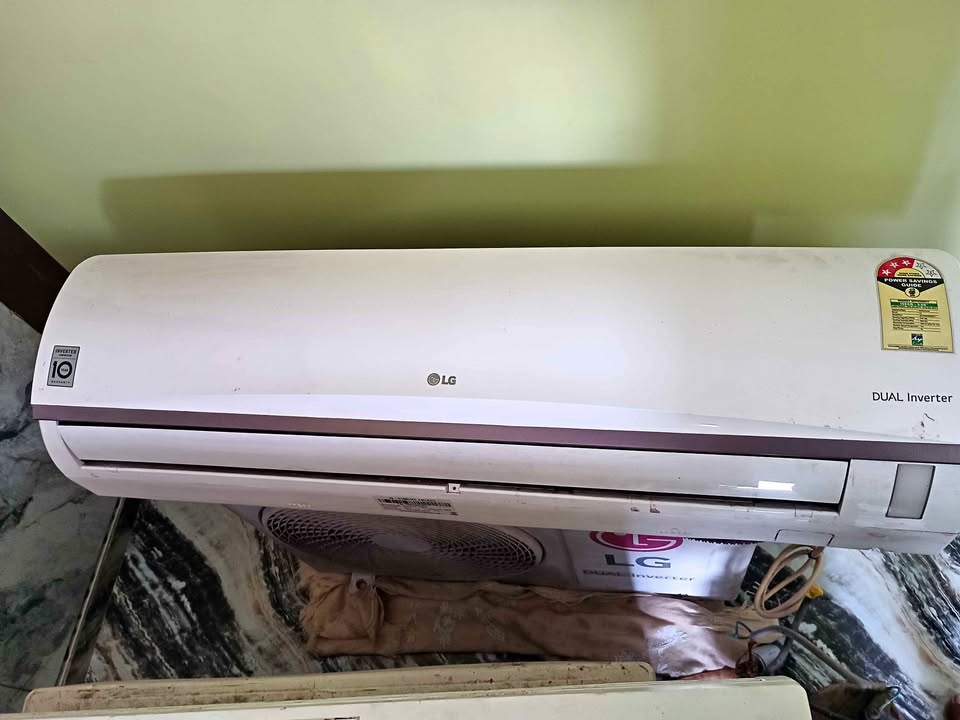
Indoor Sensor Errors (CH01/C1, CH02/C2, CH06)
Possible Causes:
- The room temperature, coil, or outlet pipe sensor has an open or short circuit.
- The sensor has come disconnected from the pipe or its mounting point.
- The connector is loose, or the wiring is broken.
What to Do:
- Check the sensor connector for a snug fit.
- Measure the sensor’s resistance against the expected value.
- Repair any damaged wiring, and replace the sensor if it tests faulty.
Indoor-Outdoor Communication Errors (CH05/C5/E53/CH53/CH93, Code 39, Code 52, Code 53)
Possible Causes:
- The communication cable is disconnected, damaged, or wired incorrectly.
- Wire terminals are burnt, corroded, or loose.
- The indoor or outdoor PCB has a communication failure, or earthing is poor.
What to Do:
- Check the communication wire for continuity end to end.
- Tighten or clean all terminal connections.
- Verify the indoor PCB’s output voltage and confirm proper earthing.
Fan Motor Errors (CH03, CH08, CH09/C9, Code 67)
Possible Causes:
- The indoor or outdoor fan motor is defective, or its connector is loose.
- Wiring is damaged, or the motor winding has gone open.
- The fan blade is jammed by dirt, debris, or a foreign object like a bird’s nest.
What to Do:
- Check that the fan rotates freely by hand.
- Inspect the wiring and test the motor winding.
- Clear any obstruction, and replace the motor if it stays faulty.
Compressor & IPM Errors (Code 21, Code 29, CH07, CH21, P22, P26)
Possible Causes:
- The compressor is overloaded, locked, or drawing high operating current.
- The IPM (inverter power module) has failed.
- Supply voltage is too low or too high.
What to Do:
- Check the power supply is within 220 to 240V.
- Measure compressor winding resistance for a short or open circuit.
- Inspect the IPM module and outdoor PCB. This is technician-level work due to the risk of compressor and inverter damage.
Voltage & Power Errors (Code 23, Code 25, Code 28, CH23, C6/CH6)
Possible Causes:
- Mains voltage is too low or too high.
- DC link voltage is abnormal.
- The outdoor PCB has a fault.
What to Do:
- Measure the input voltage at the wall.
- Install a voltage stabilizer if supply fluctuates often.
- Inspect the outdoor PCB for damage if voltage checks out normal.
Refrigerant & High-Temperature Protection Errors (CH38/P38/36, Code 32, Code 33, CH32, CH34, CH61, CH62, CH63)
Possible Causes:
- Refrigerant is leaking or low, or the system is overcharged.
- The condenser is dirty, or airflow is poor.
- Ambient temperature outside is unusually high.
What to Do:
- Leak test the entire refrigeration system.
- Clean the condenser coil and verify the refrigerant charge.
- Improve airflow around the outdoor unit. Refrigerant handling requires a licensed technician, so do not attempt this yourself.
Refrigerant leak repair and recharging should only be done by a certified technician. Contact Urban Service Plaza’s expert technician for affordable gas leakage inspection and AC gas refilling service in Kolkata & nearby areas.
Sensor (Pipe, Suction, Discharge, Heat Sink) Errors (Code 41, Code 44, Code 45, Code 46, Code 47, CH44, CH45, CH46, CH47, CH51, CH65)
Possible Causes:
- The pipe, suction, discharge, or heat sink sensor has an open or short circuit.
- The connector is loose.
- Wiring is damaged.
What to Do:
- Inspect the sensor and its wiring closely.
- Measure resistance to confirm the sensor is faulty.
- Replace the sensor if it fails the resistance test.
PCB, EEPROM & Electronic Errors (Code 60, CH39, CH40, CC, CD)
Possible Causes:
- EEPROM checksum data is mismatched.
- The PCB has a communication failure or CT circuit malfunction.
- The IPM or inverter module has failed.
What to Do:
- Restart the unit to reset the checksum.
- Reseat all PCB connectors and check for damage.
- Reprogram or replace the PCB if the error persists. This is technician-level work.
- For low cost inverter and non-inverter AC PCB repair in Kolkata call us at +91 9831015086
Drain System Error (CH04)
Possible Causes:
- The drain pump has failed.
- The float switch has activated due to water accumulation.
- The drain line is blocked.
What to Do:
- Check that the drain pump is running.
- Clear any blockage in the drain hose.
- Inspect the float sensor for proper operation.
Codes That Are Not Faults (P0, LO)
Possible Causes:
- P0 means the system is in power mode, a normal operating state.
- LO means the system is in test mode, also normal.
What to Do:
- No action is needed for either code.
- These clear on their own once the mode ends.
When an LG AC Error Code Means You Need a Technician?
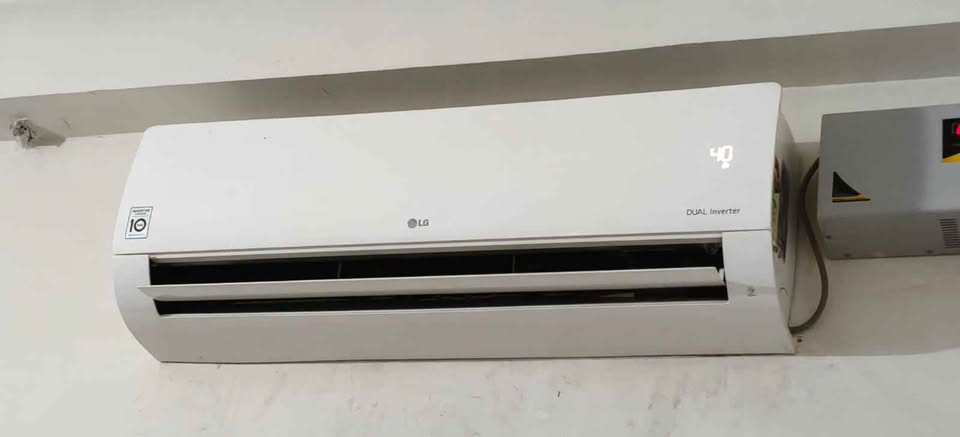
Sensor and connector issues are often safe to check yourself. However, several fault categories involve high voltage, refrigerant, or specialised components, and should always be left to a licensed technician.
Call a professional if you see:
If your LG AC is out of warranty or its AMC has expired, Urban Service Plaza’s certified technicians in Kolkata can diagnose and repair these faults safely at your doorstep.
Key Takeaways
LG AC error codes fall into clear categories: sensor, communication, fan, compressor, voltage, refrigerant, and PCB faults. Most display as numeric or CH/C-codes, and the table above helps you identify any code in seconds.
Basic checks like a power cycle, filter clean, wiring inspection, or voltage check resolve many issues. But compressor, refrigerant, and PCB faults need a professional. If your code persists after basic troubleshooting, contact Urban Service Plaza for a proper diagnosis.


