 Call Technician

AC Blowing Hot Air Instead of Cold? Causes, Quick Checks & Fixes
AC blowing warm air? Find the exact cause fast with our quick-check table, step-by-step fixes, and know-when-to-call-a-technician guide.
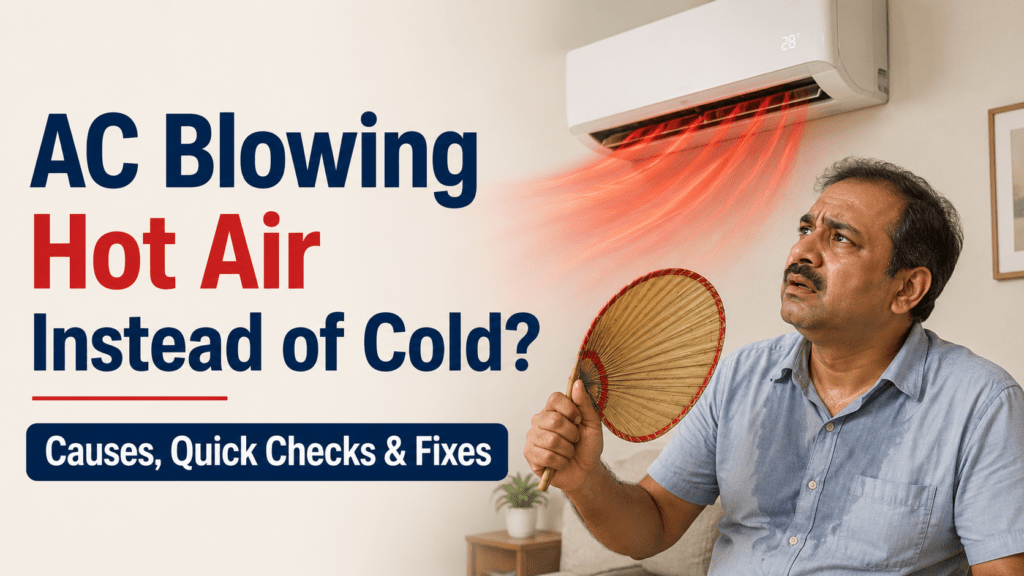
Why Is Your AC Blowing Hot Air?
Most AC units blow warm air due to one of these 7 issues — check the table below to find your likely cause in seconds.
| What You Notice | Likely Cause | Quick Fix |
|---|---|---|
| Outdoor fan runs but no cold air | Weak or failed capacitor | Replace capacitor (technician) |
| Ice on indoor coil or pipe | Frozen evaporator coil | Turn off AC, let it thaw, check filter |
| AC shuts off on its own, water near indoor unit | Clogged condensate drain | Clear the drain line |
| Hissing sound with weak cooling | Refrigerant leak | Call technician, do not DIY |
| Outdoor unit completely silent | Tripped breaker or power issue | Check breaker and wiring |
| Room never reaches set temperature despite long runtime | Dirty filter or condenser coil | Clean filter and outdoor coil |
| Thermostat shows cool mode but air is warm | Thermostat or mode setting error | Verify mode is set to “Cool,” not “Fan” |
An AC blowing hot air instead of cool air is one of the most common problems homeowners face during the summer months. It can feel alarming, especially when you need relief from the heat right away. The good news is that this problem does not always mean your unit needs replacement. In many cases, the cause is something simple you can check yourself.
This article gives you a clear path forward. You will find a quick diagnosis table, step-by-step checks you can run at home, and the warning signs that mean it is time to call a professional like Urban Service Plaza. By the end, you will know exactly what is going wrong and what to do next.

How Does an AC Actually Cool a Room?
An air conditioner does not “create” cold air. It works by moving heat out of your room in a simple cycle:
If any step breaks down, the air coming out turns warm instead of cool.
Do These 5 Things Before You Call a Technician?

Hire Our Expert AC Mechanic for Same Day Service Without Advance Charges
Common Causes of AC Blowing Hot Air (Detailed Breakdown)
Thermostat or Remote Setting Issue
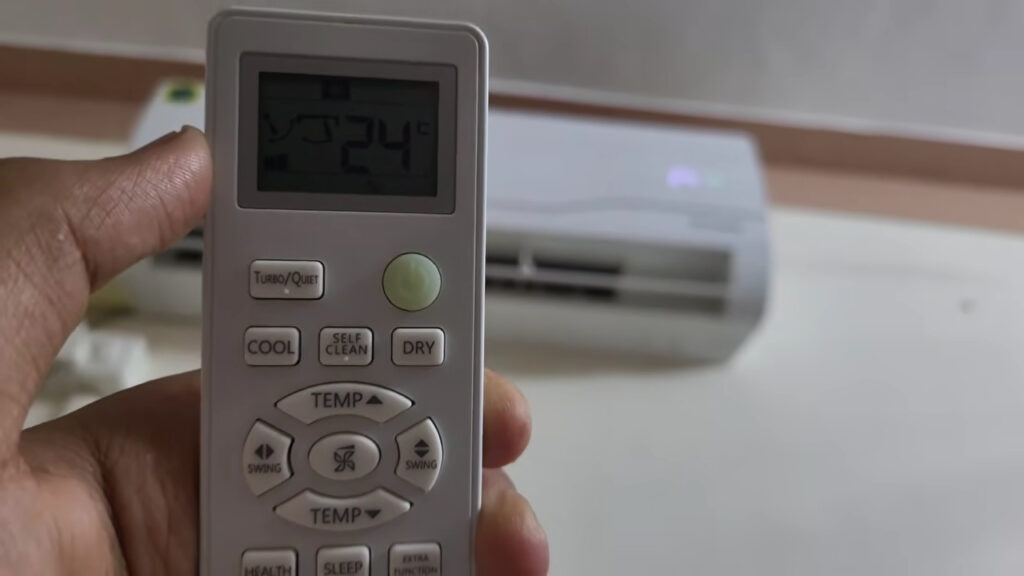
This is the simplest cause and the easiest to fix. Sometimes the mode is set to “Fan” instead of “Cool,” the thermostat isn’t reading room temperature correctly, or the remote has weak batteries.
Signs to look for:
- Display shows “Fan” or “Auto” instead of “Cool”
- Set temperature is higher than the room temperature
- Remote is unresponsive or slow to respond
- AC runs but no cool air comes out at all
What to do: Check the mode, lower the temperature setting, and replace the remote batteries if needed.
Dirty or Clogged Air Filter
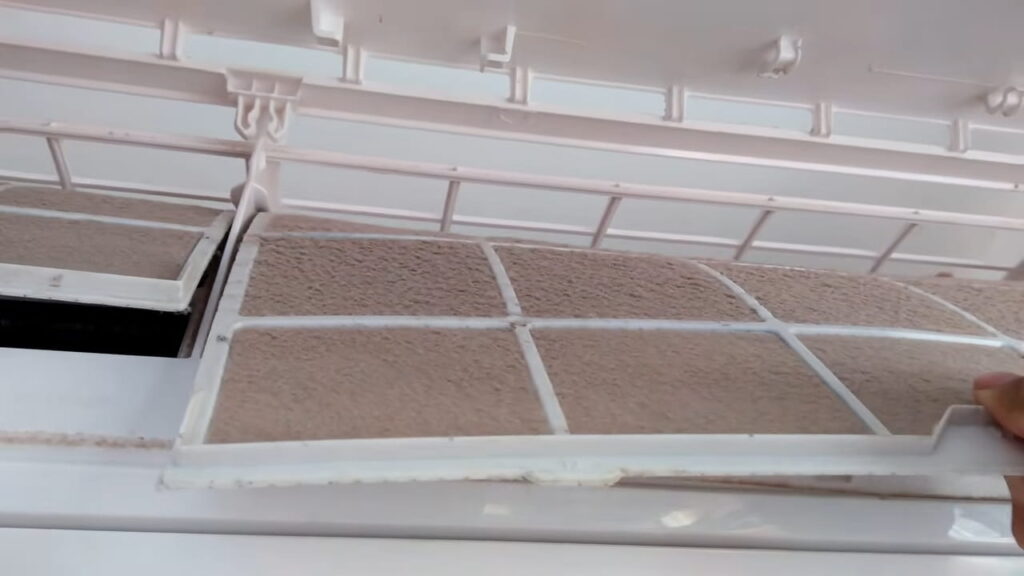
A blocked air filter restricts airflow into the unit. This reduces cooling capacity and, over time, can cause the evaporator coil to freeze completely.
Signs to look for:
- Weak airflow from the vents
- Visible dust buildup on the filter
- AC running longer than usual to cool the room
- Musty smell when the AC starts
What to do: Clean the filter every 15–30 days. Replace it if it looks damaged, discolored, or too clogged to clean properly.
If you are not confident to fix AC hot air blowing issue, contact Urban Service Plaza, the best AC repair service in Kolkata for a quick inspection only @ ₹299
Frozen Evaporator Coil
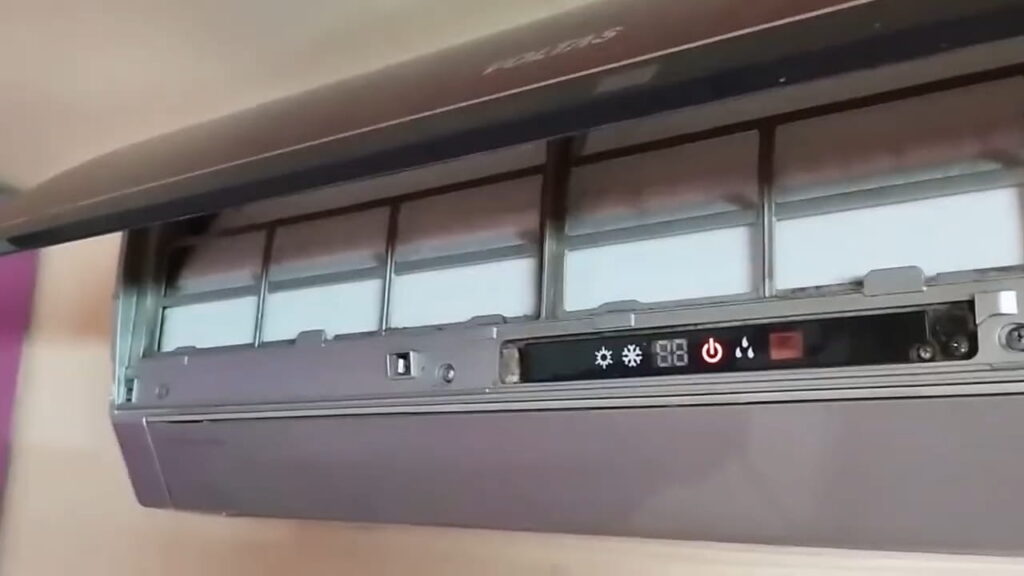
A frozen coil usually results from a dirty filter, restricted airflow, or low refrigerant. Once ice forms, it blocks the coil from absorbing heat properly.
Signs to look for:
- Little or no airflow from vents
- Warm air blowing despite the AC running
- Visible ice on the indoor coil or pipes
What to do:
- Turn off the AC immediately.
- Switch the fan to “On” so it can help thaw the ice.
- Check and clean the air filter.
- Call a technician if the coil freezes again after thawing.
Low or Leaking Refrigerant Gas
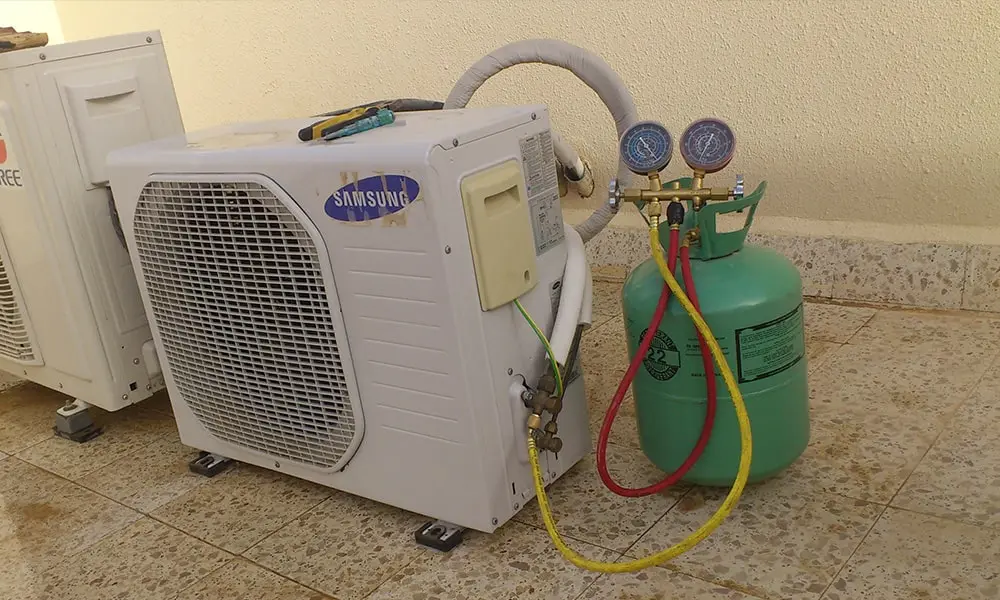
Refrigerant does not get “used up” during normal operation. If levels are low, it almost always means there is a leak somewhere in the system.
Signs to look for:
- Hissing or bubbling sound near the unit
- Ice forming on the thin copper pipe
- Weak cooling even after long runtime
- Rising electricity bills without added usage
Caution: Refrigerant handling requires a certified technician. Do not attempt to check or refill gas levels yourself. Hire us for same day affordable AC gas filling service in Kolkata.
Faulty Capacitor or Compressor Issue (Outdoor Unit)
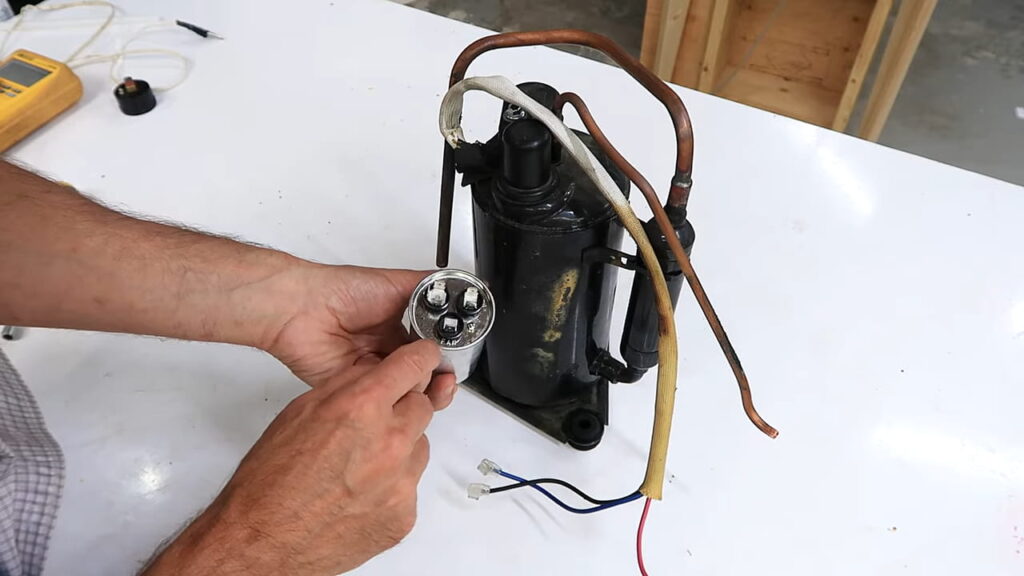
The capacitor helps start the compressor and fan motor. When it fails, the outdoor fan may run while the compressor stays off, so the system blows warm air indoors. Capacitors commonly fail after 3–4 years of use.
Signs to look for:
- Outdoor fan spins, but no cooling happens
- AC tries to start but shuts off quickly
- Humming sound from the outdoor unit
Safety note: Capacitors store dangerous electrical charge even when the power is off. Replacement should always be handled by a trained technician.
Suggested articles: Why Is My AC Fan Running But Not Cooling? Quick Fix Guide
Clogged Condensate Drain Line
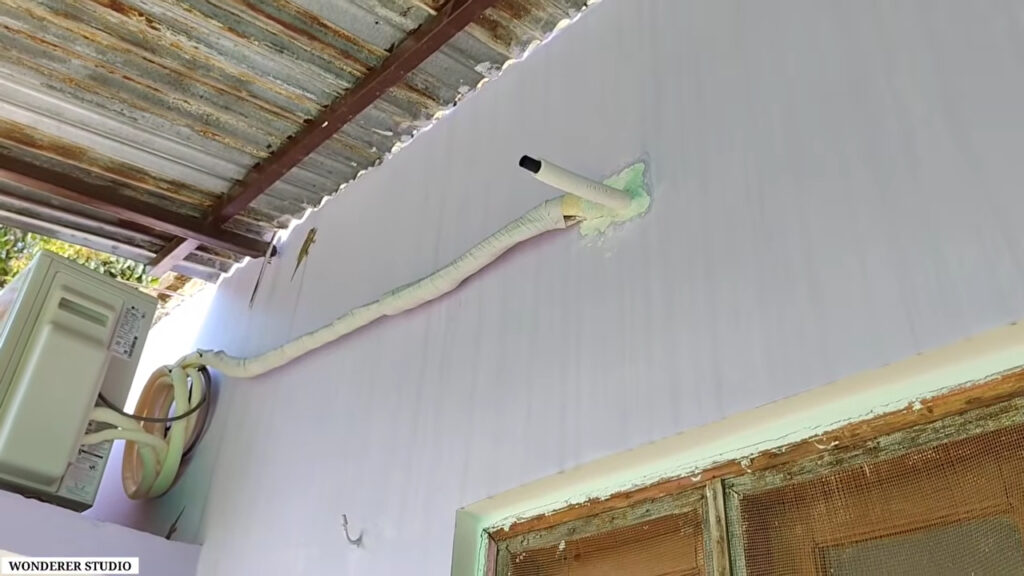
Many AC models use a safety float switch that shuts down cooling when the condensate drain line gets blocked. This prevents water from overflowing and causing damage indoors.
Signs to look for:
- AC shuts off on its own after running for a while
- Water pooling near the indoor unit
- No water dripping from the outdoor drain pipe
What to do: Turn off the AC and check the drain line for visible clogs. If the blockage is deep in the line or the float switch keeps tripping, call a technician.
Suggested articles: AC Not Cooling or Low Cooling Problem Issue – Solution
Dirty or Blocked Outdoor Condenser Coil
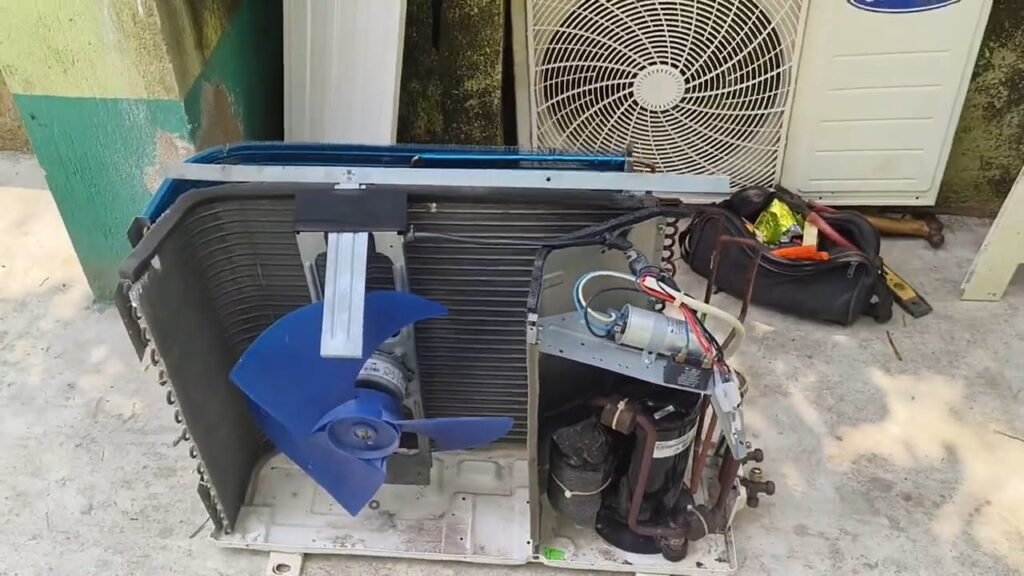
Dirt, dust, and debris on the outdoor unit prevent it from releasing heat properly. This forces the compressor to work harder and overheat, which reduces overall cooling.
Signs to look for:
- Outdoor unit surrounded by leaves, dust, or overgrown plants
- Coil fins visibly dirty or blocked
- AC running constantly without reaching set temperature
What to do: Turn off the power, gently clean the coil fins with a soft brush, and keep at least two feet of clear space around the outdoor unit.
Incorrect AC Size for the Room
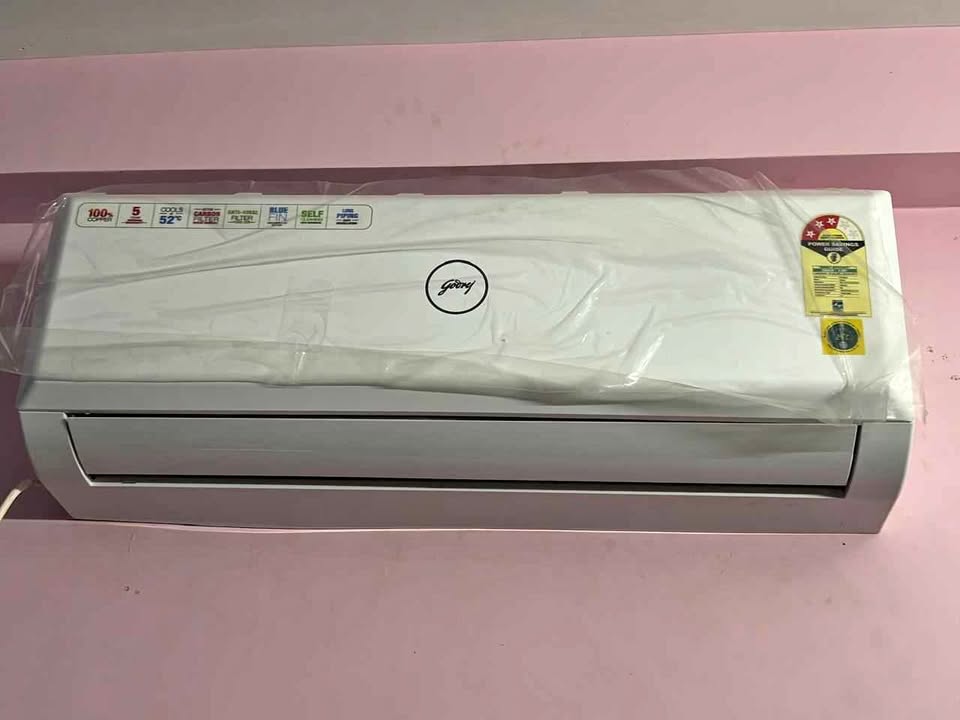
An undersized AC unit struggles to cool a large room and ends up running almost continuously. This constant strain can make it feel like the AC is blowing warm air, even when the system itself is working fine.
| Cause | DIY or Technician Needed | Approx. Fix Difficulty |
|---|---|---|
| Thermostat/mode setting | DIY | Easy |
| Dirty filter | DIY | Easy |
| Frozen coil | DIY to diagnose / Technician if recurring | Medium |
| Low refrigerant/leak | Technician | Hard |
| Faulty capacitor | Technician | Hard |
| Clogged drain line | DIY basic clearing / Technician if persists | Medium |
| Dirty condenser coil | DIY | Easy–Medium |
| Wrong AC size | Technician consultation | Hard/structural |
When Should You Stop Troubleshooting and Call a Technician?

Some warning signs mean it is time to stop DIY troubleshooting and bring in a professional.
Refrigerant and capacitor work should never be attempted as DIY tasks. Capacitors store electrical charge that can cause serious injury even when the unit is switched off, and refrigerant handling requires proper certification and equipment. Attempting these repairs yourself can also void any remaining warranty on your unit.
Frequently Asked Questions
Why is my AC blowing warm air even though it’s turned on?
This usually points to a mode setting error, dirty filter, frozen coil, low refrigerant, or a faulty capacitor. Check the quick diagnosis table above to narrow down your specific cause.
Can a dirty filter really cause an AC to blow hot air?
Yes. A clogged filter blocks airflow, which reduces cooling capacity and can eventually freeze the evaporator coil, leading to warm air from the vents.
Is it safe to refill refrigerant gas myself?
No. Refrigerant handling requires special equipment, certification, and leak detection skills, so this job should always be left to a trained technician.
How do I know if my AC’s outdoor unit has a bad capacitor?
If the outdoor fan runs but the compressor doesn’t start, or the unit tries to start and shuts off quickly, a weak capacitor is often the cause.
Why does my AC blow cold air for a while and then turn warm?
This pattern often signals a frozen coil, low refrigerant, or a dirty condenser coil that makes the system struggle to keep up after the initial cooling burst.
How often should I service my AC to avoid this problem?
Clean the filter every 15–30 days and schedule a professional service check at least once or twice a year, especially before peak summer months.
Final Thoughts
Most cases of an AC blowing hot air trace back to a handful of common causes: a dirty filter, a wrong thermostat setting, a clogged drain line, a failing capacitor, or low refrigerant. The quick checklist above resolves many of these issues without needing a technician at all.
However, if the problem keeps coming back or involves electrical components or refrigerants, it’s best left to a certified professional. If your troubleshooting hasn’t fixed the issue, book a diagnostic visit with Urban Service Plaza and get your AC cooling properly again.


