 Call Technician

AC Bill Too High? 13 Causes & Easy Fixes [Quick Diagnosis]
Cut your AC bill with simple fixes. See 13 causes, from dirty filters to wrong temperature, plus a daily AC cost calculator.
Why Is Your AC Bill High? At A Glance
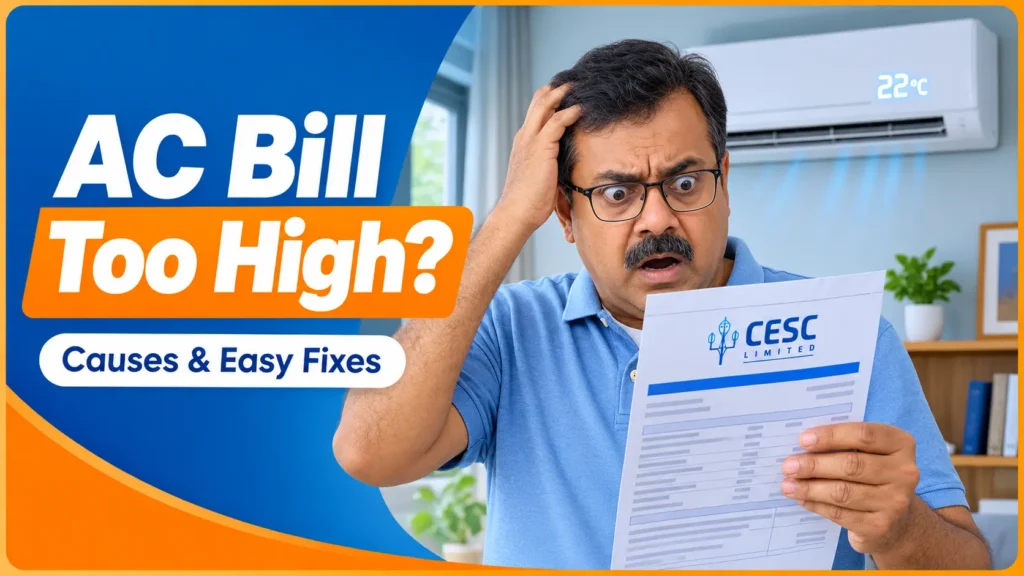
The most common cause of a high AC electricity bill is running the AC at a very low temperature or using it with dirty filters. Both make the compressor work harder and use more power. Try these fixes right now:
Scroll down for the full list of 13 causes, a quick-reference table, and a bill calculator.

Quick Diagnosis Table
| Cause of High Bill | Quick Fix |
|---|---|
| Wrong Temperature Setting | Set AC to 24°C–26°C |
| Dirty Filters & Coils | Clean filter every 15 days |
| Air Leakage from Room | Seal gaps around doors and windows |
| Outdoor Unit in Direct Sunlight | Install shade or cover over unit |
| Incorrect AC Tonnage | Match tonnage to room size |
| Gas Leakage or Low Refrigerant | Repair leak and refill gas |
| Weak or Faulty Capacitor | Replace damaged capacitor |
| Low Voltage & Power Fluctuation | Use a good-quality stabilizer |
| Old or Inefficient AC | Upgrade to inverter, 5-star AC |
| Wrong Usage Habits | Use timer or sleep mode |
| Not Using Fan with AC | Run ceiling fan on low speed |
| Top Floor & Heat from Roof | Apply heat-reflective roof paint |
| Wrong AC Modes & Settings | Use Cool or Dry mode correctly |
Find Out How Much Your AC Costs You Every Day
Want to know roughly what your AC is costing you each day? This calculator uses the standard EER formula to estimate your running cost. It gives a close approximation, not your exact bill, since actual usage also depends on your AC brand, weather, voltage stability, and habits.

Call Our AC Techniaicn in Kolkata & Fix Your High AC Bill Problem
A sudden spike in the electricity bill is one of the most common AC complaints during peak summer. Most people searching for an AC high electricity bill fix assume their unit is old or broken, but that is not always true.
The real cause is often a mix of settings, maintenance, and installation issues you can fix yourself. This guide gives you a quick answer table, a running cost calculator, and a detailed look at every common cause, so you can find your fix fast.
Contact Urban Service Plaza’s experienced technician for AC jet cleaning & repair work to fix high electricity bill problem.
13 Common Reasons Your AC Bill Is High (& How to Fix Each)
1. Your Temperature Setting Is Too Low
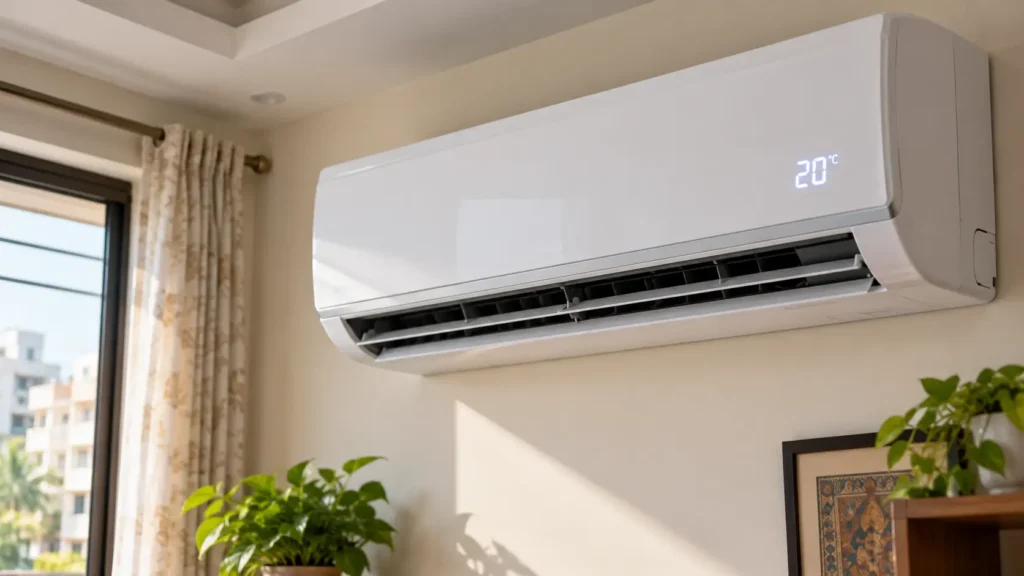
Setting the AC below 24°C forces the compressor to run longer to reach that target, using much more power. Every degree below 24°C adds noticeably to your electricity use.
Solution:
2. Dirty Filters and Coils Are Blocking Airflow
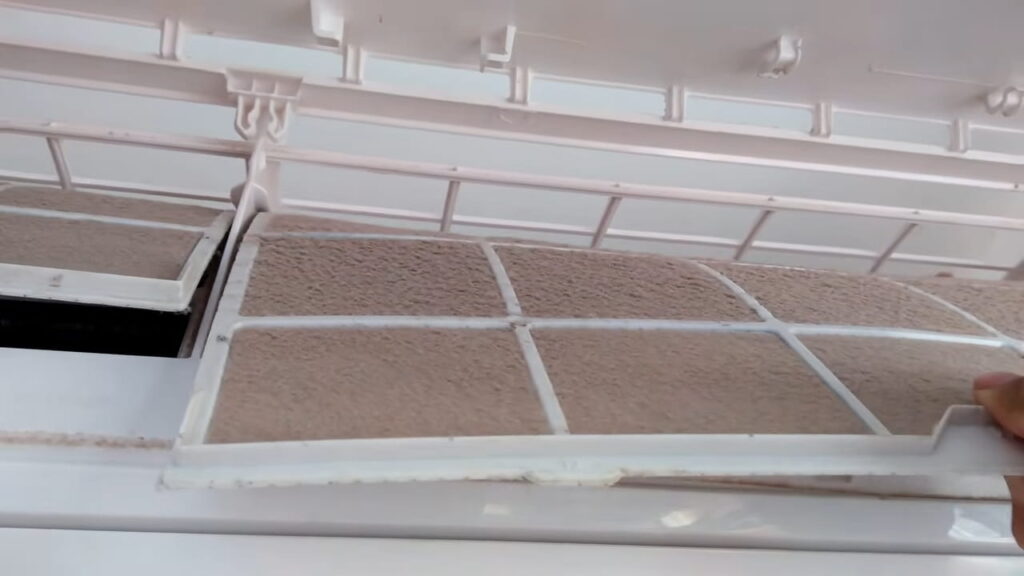
Dust on filters blocks airflow, and dirt on the evaporator and condenser coils cuts heat exchange efficiency. The compressor then runs longer to make up for the lost efficiency, driving up your bill.
Solution:
3. Cool Air Is Leaking Out of the Room
Gaps under doors, windows, or around the AC pipe let cool air escape and hot air enter. This makes the AC take longer to cool the room, so it uses more electricity than it should.
Solution:
- Seal pipe holes with foam, silicone, or white cement
- Use foam tape or rubber strips on doors and windows
- Keep doors and windows closed while the AC runs
4. The Outdoor Unit Sits in Direct Sunlight
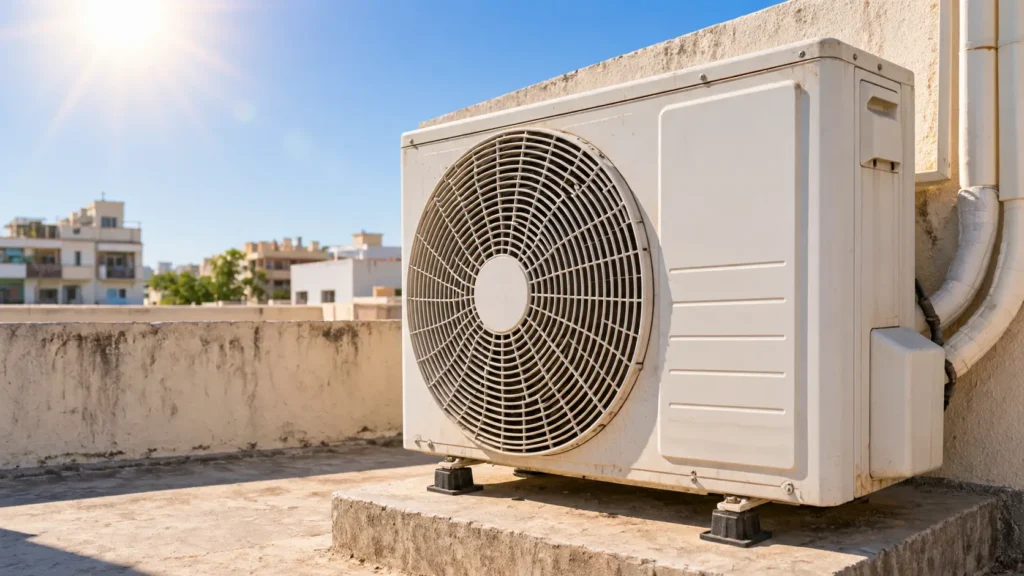
The outdoor unit already works to release heat, and direct sunlight makes it hotter still. The compressor then works harder to push heat out of the room, raising power consumption.
Solution:
5. Your AC Tonnage Doesn’t Match Your Room
An undersized AC in a large room runs almost continuously without proper cut-off, keeping the compressor at high load. Cooling stays weak while electricity use climbs.
Solution:
6. Gas Leakage or Low Refrigerant Is Straining the Compressor
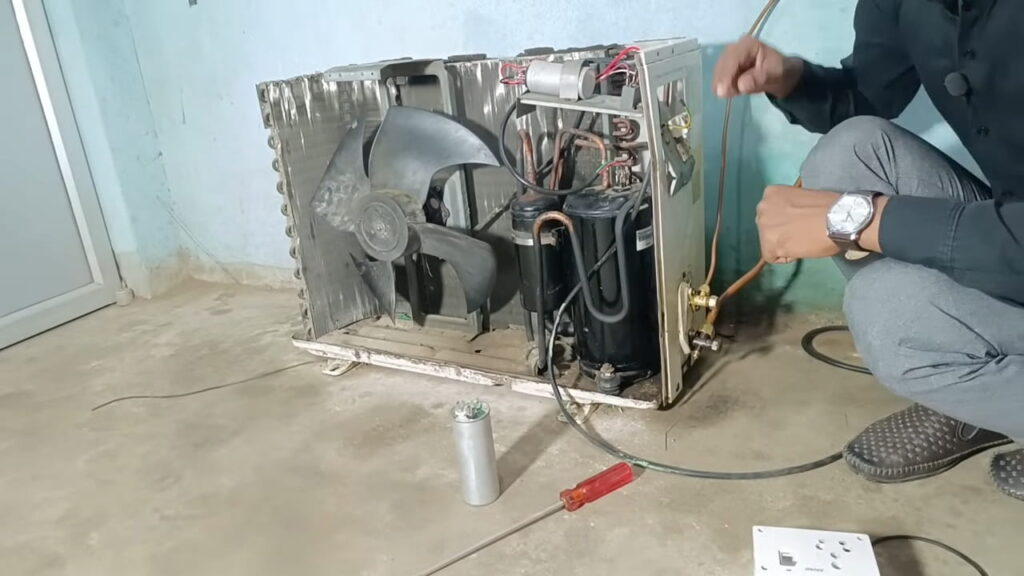
Low refrigerant means weak cooling, ice formation, and a compressor that keeps running without ever reaching the set temperature. This continuous running sharply increases electricity use.
Solution:
7. A Weak or Faulty Capacitor Is Overworking the Compressor
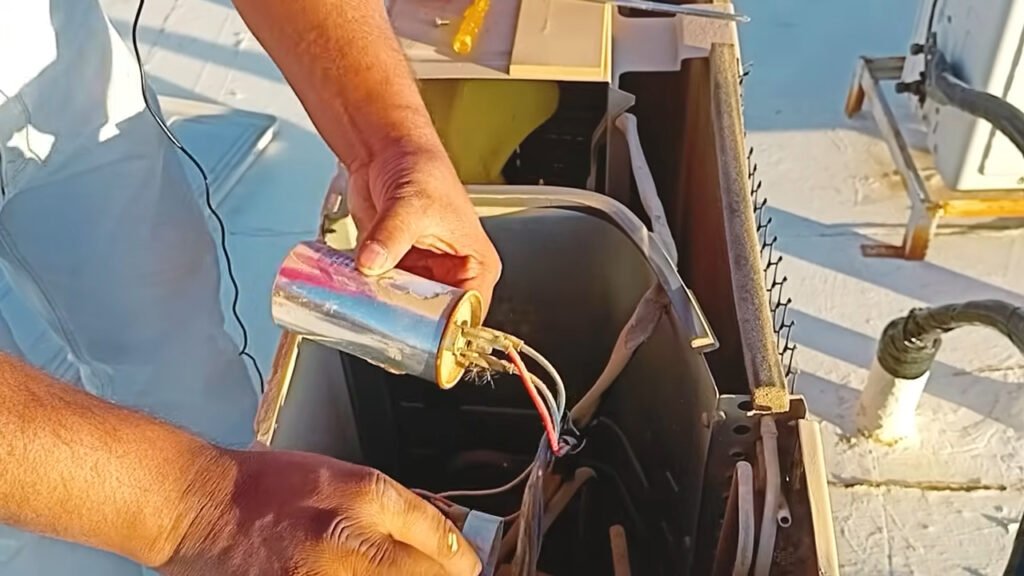
A weak compressor capacitor causes hard starting, making the compressor draw higher current. A failing outdoor fan capacitor adds to this load, lowering cooling while raising your bill.
Solution:
8. Low Voltage or Power Fluctuation Is Increasing Current Draw
Voltage fluctuation lowers compressor efficiency and can cause repeated tripping. Low voltage also increases current draw, meaning higher energy consumption for the same cooling output.
Solution:
9. You’re Using an Old or Inefficient AC
Older non-inverter ACs have lower ISEER ratings and consume far more electricity for the same cooling. Some cheaper newer models also underperform on actual cooling capacity.
Solution:
10. Your Usage Habits Are Wasting Power
Running the AC all night or at the lowest temperature setting wastes a lot of electricity. Leaving it on standby instead of switching off the main power adds to this waste too.
Solution:
11. You’re Not Running a Fan Along With the AC
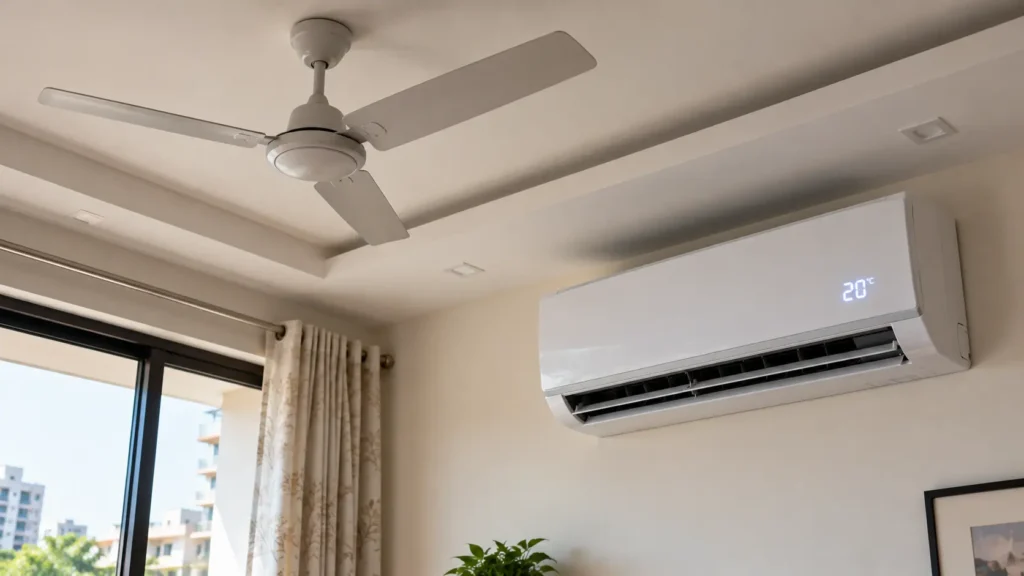
Relying on the AC alone often means slower air circulation and uneven cooling. This forces the AC to work longer to cool the whole room evenly.
Solution:
12. Your Top Floor Room Absorbs Roof Heat
A roof slab exposed to direct sun gets extremely hot and keeps pushing heat into the room below. The AC then struggles constantly to hold the set temperature.
Solution:
13. You’re Using the Wrong AC Mode or Setting
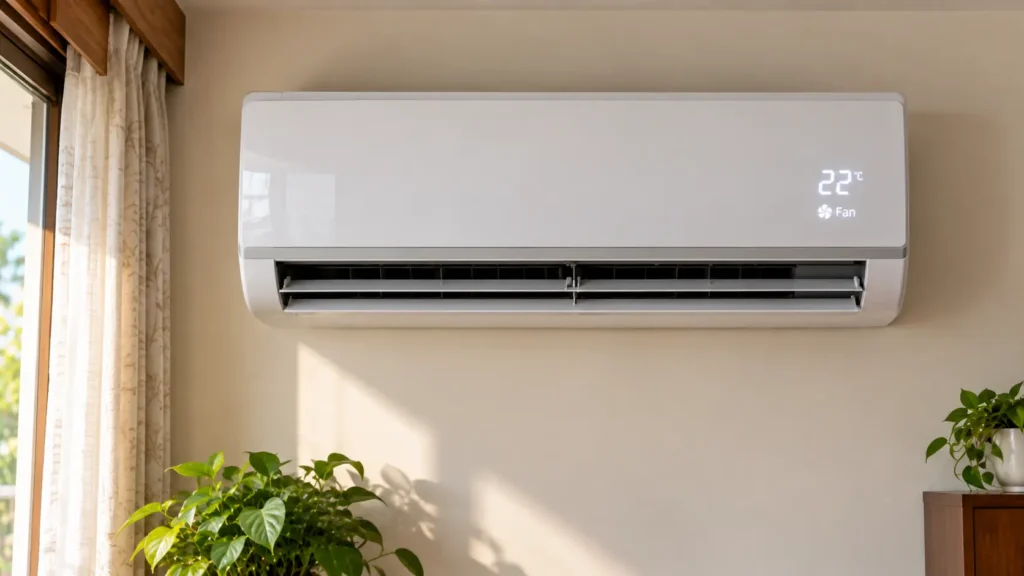
Using an incorrect mode, like fan mode when you need cooling, or the wrong convertible setting, quietly wastes efficiency. Many users make this mistake without realizing it.
Solution:
Simple Habits to Lower Your AC Electricity Use
How Much Electricity Does an AC Actually Use?
A typical 1.5-ton 5-star AC uses around 1.2–1.5 kWh per hour, depending on load and weather conditions. Running it for 8 hours a day can add up quickly and noticeably affect your monthly bill.
| AC Type | Approx. Power Use (kWh/hour) |
|---|---|
| 1-ton, 5-star | 0.6–0.8 |
| 1.5-ton, 5-star | 1.2–1.5 |
| 1.5-ton, 3-star | 1.5–1.9 |
| 2-ton, 5-star | 1.6–2.0 |
Note: These are estimates. Actual consumption depends on voltage stability, room conditions, and usage habits.
Commonly Asked Questions
Does a faulty sensor increase electricity bills?
Yes. A faulty sensor sends wrong temperature readings, making the AC overcool or run nonstop instead of cycling normally. This uneven operation increases electricity use and strains the compressor.
What temperature should I set my AC to save electricity?
Set your AC between 24°C and 26°C. This range balances comfort with efficiency, since every degree lower makes the compressor run longer and use more power.
Does running a ceiling fan with AC really save power?
Yes. A fan spreads cool air faster across the room, letting you set the AC a bit higher while staying comfortable, which reduces overall power use.
Is it better to turn off the AC from the remote or the main switch?
Switch off the main power after using the remote. Some standby power is still drawn if only the remote turns off the unit, adding to your bill over time.
How often should I clean my AC filter to avoid high bills?
Clean the filter every 15 days during summer. A dirty filter blocks airflow, making the AC work harder and consume more electricity.
Can low refrigerant gas increase my electricity bill?
Yes. Low refrigerant means weak cooling, so the compressor keeps running continuously trying to reach the set temperature, which sharply raises electricity consumption.
Suggested Article: Which Gas is Used in AC? R22, R32 & R410 Comparisons
When to Call a Professional AC Technician?
Some causes of high electricity bills need expert diagnosis, not DIY fixes. Call a technician if you notice:
Urban Service Plaza’s technicians can diagnose and safely fix these issues, from refrigerant leaks to electrical faults, so your AC runs efficiently again.
Most high AC bills come from a mix of settings, maintenance, and installation issues, not just the AC’s age. Start with the fastest wins: the right temperature, clean filters, a sealed room, and a shaded outdoor unit.
Use the calculator above to estimate your savings, and book a professional AC service if the problem continues.


