
Blue Star AC Error Codes & Troubleshooting Guide [Error Finder]
Confused by your Blue Star AC error code? Find error codes using our error code finder, their meaning and troubleshoot.
TL;DR – Blue Star AC Error Codes at a Glance
Blue Star AC Error Codes List
Blue Star AC error code lookup
Type your error code below to see what it means and the quick fix to try.
| Error Code | What It Means | Quick Fix |
|---|---|---|
| EE | EEPROM fault on outdoor PCB | Reseat or replace EEPROM chip |
| EC | Refrigerant leakage / low gas | Find leak, vacuum, recharge gas |
| E2 | Indoor coil freezing / evaporator protection | Clean coil, check blower speed & refrigerant |
| E4 | High compressor discharge temperature | Clean condenser, check fan & refrigerant |
| E5 | Abnormal AC input voltage | Check supply voltage, use stabilizer |
| E6 | Indoor-outdoor communication failure | Check wiring, connectors & polarity |
| F1 | Indoor room temperature sensor fault | Test sensor resistance, replace if faulty |
| F2 | Indoor evaporator coil sensor fault | Check resistance and connector |
| F4 | Discharge temperature too high | Check condenser airflow & refrigerant |
| F5 | Outdoor discharge pipe sensor fault | Test sensor, inspect wiring |
| H6 | Indoor blower motor fault | Clean blower, check motor & capacitor |
| PH | High or low AC input voltage | Measure mains, install stabilizer |
| P0 | Outdoor unit getting zero current | Check outdoor power supply & wiring |
| P3 | DC current / starting current protection | Measure DC voltage on PCB |
| P5 | Compressor phase/current protection | Check compressor terminals & wiring |
| P6 | IPM (power module) fault | Inspect and replace IPM |
| P8 | IPM over-temperature protection | Check heat sink & airflow |
| A2 | Indoor coil sensor fault (some models) | Check sensor resistance & connector |
| A3 | Outdoor ambient temperature sensor fault | Measure resistance, inspect wiring |
| A5 | Outdoor discharge sensor fault (some models) | Test sensor, repair wiring |
Blue Star AC error codes appear on the indoor display or through blinking LED patterns whenever the unit’s sensors detect a fault. This built-in system helps you pinpoint the exact problem fast, instead of guessing what’s wrong. Some codes clear on their own after a quick reset, while others signal a serious issue that needs a technician right away.
This guide gives you a quick-reference table of every Blue Star AC error code, explains what each one means in plain language, and walks through simple DIY checks you can try first. You’ll also learn the clear warning signs that tell you when it’s time to call in professional help.


Hire Our Expert Blue Star AC Technician in Kolkata Without Advance Charges
How to Read Blue Star AC Error Codes?
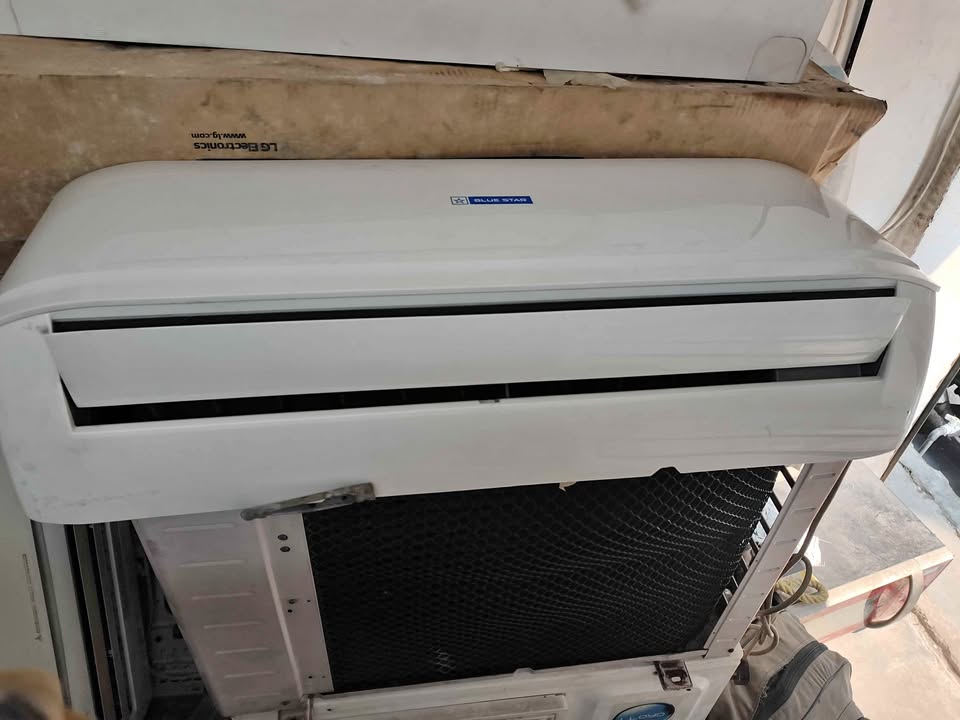
Blue Star indoor units usually show the error code directly on the display panel. On models without a digital display, the unit signals faults through blinking Operation and Timer LEDs instead. Dirty or damaged display and sensor terminals can also affect what’s shown, so a blank or flickering screen isn’t always an error code on its own.
Before you diagnose the code:
- Note the exact code shown before switching off the unit.
- Check if the code is steady or intermittent.
- Confirm cooling, fan, and compressor status while the code shows.
- Switch off power for 5-10 minutes and see if the code clears.
Urban Service Plaza offers reliable, out-of-warranty Blue Star AC repair in Kolkata, Barasat, Howrah & Barrackpore. Not an authorized centre, but we use genuine spare parts and back every repair with a bill and guarantee.
Blue Star AC Error Codes, Causes & Fixes
EE — EEPROM Fault (Outdoor PCB)
This code points to a memory chip fault on the outdoor PCB.
Possible Causes:
- EEPROM IC failure.
- EEPROM overheating.
- Loose EEPROM pins.
- Damaged outdoor PCB.
What to Do:
- Inspect the EEPROM IC for visible damage.
- Reseat or replace the EEPROM chip.
- Repair or replace the outdoor PCB if needed.
EC — Refrigerant Leakage / Low Refrigerant Protection
This code means the system has detected a refrigerant leak or low gas charge.
Possible Causes:
- Refrigerant leak somewhere in the system.
- Low gas charge from the start.
What to Do:
- Find and repair the leak.
- Vacuum the system before recharging.
- Recharge refrigerant to the correct specification.
E2 — Indoor Evaporator Freezing / Coil Protection
This code triggers when the indoor coil is at risk of freezing.
Possible Causes:
- Dirty evaporator or dirty blower wheel.
- Low blower speed or a weak blower motor.
- Refrigerant shortage.
- A restricted or pinched pipe.
What to Do:
- Clean the evaporator coil and blower.
- Verify blower speed is normal.
- Check refrigerant pressure.
- Inspect piping for restrictions.
E4 — High Discharge Temperature
This code shows the compressor’s discharge temperature is too high.
Possible Causes:
- Compressor discharge temperature too high.
- Poor condenser cooling.
- Refrigerant system problems.
What to Do:
- Check condenser cleanliness.
- Verify condenser fan operation.
- Check the refrigerant system.
E5 — AC Voltage Abnormal
This code signals a problem with incoming power supply.
Possible Causes:
- High voltage.
- Low voltage.
- Voltage fluctuations.
What to Do:
- Measure supply voltage.
- Use a correct stabilizer if required.
- Repair unstable power supply.
E6 — Indoor-Outdoor Communication Failure
This code means the indoor and outdoor units can’t communicate properly.
Possible Causes:
- Communication wire disconnected.
- Wrong wiring polarity.
- Loose connector.
- PCB communication failure.
What to Do:
- Check communication cable continuity.
- Verify terminal connections.
- Tighten loose connectors.
- Inspect indoor and outdoor PCB.
F1 — Indoor Room Temperature Sensor Fault
This code points to a fault in the room temperature sensor.
Possible Causes:
- Open or shorted sensor.
- Loose connector.
- Broken wire.
What to Do:
- Measure sensor resistance.
- Heat or cool the sensor to verify its response.
- Replace the sensor if faulty.
F2 — Indoor Evaporator Coil Sensor Fault
This code means the coil sensor isn’t reading correctly.
Possible Causes:
- Open sensor or short circuit.
- Loose connector.
- Damaged wiring.
What to Do:
- Check resistance.
- Verify the connector.
- Replace the sensor if defective.
F4 — Discharge Temperature Too High
This code shows excessive heat at the compressor discharge.
Possible Causes:
- Excessive compressor discharge temperature.
- Refrigerant system fault.
What to Do:
- Check condenser airflow.
- Verify refrigerant charge.
- Inspect compressor operation.
F5 — Outdoor Discharge Pipe Sensor Fault
This code points to a faulty sensor on the outdoor discharge pipe.
Possible Causes:
- Faulty discharge sensor.
- Open or short circuit.
- Loose wiring.
What to Do:
- Measure sensor resistance.
- Inspect wiring.
- Replace the sensor if required.
H6 — Indoor Blower Motor Fault
This code signals a problem with the indoor blower motor.
Possible Causes:
- Blower motor failure.
- Weak capacitor.
- Slow blower speed or jammed blower wheel.
- Motor winding damage.
What to Do:
- Clean the blower.
- Check motor speed.
- Inspect the capacitor.
- Replace the motor if defective.
PH — High or Low AC Input Voltage
This code means the mains voltage is outside the safe range.
Possible Causes:
- Abnormal mains voltage.
What to Do:
- Measure mains voltage.
- Repair the electrical supply.
- Install a stabilizer if necessary.
P0 — Outdoor Unit Zero Current / Supply Issue
This code shows the outdoor unit isn’t receiving power.
Possible Causes:
- No power reaching the outdoor unit.
- Outdoor PCB issue.
- Wiring fault.
What to Do:
- Verify outdoor power supply.
- Check wiring.
- Inspect the PCB.
P3 — DC Current / Starting Current Protection
This code points to an abnormal DC supply during startup.
Possible Causes:
- DC supply abnormal.
- PCB power circuit fault.
What to Do:
- Measure DC voltage on the PCB.
- Repair the PCB power section.
P5 — Compressor Phase/Current Protection
This code protects the compressor from phase or current issues.
Possible Causes:
- Loose compressor wiring.
- Missing compressor phase.
- Low or high voltage.
What to Do:
- Check compressor terminals.
- Tighten wiring.
- Verify voltage.
P6 — IPM (Intelligent Power Module) Fault
This code signals a fault in the outdoor unit’s power module.
Possible Causes:
- Damaged IPM.
- Burnt module.
- PCB failure.
What to Do:
- Inspect the IPM.
- Replace the IPM.
- Repair the outdoor PCB.
P8 — IPM Over-Temperature Protection
This code means the power module is overheating.
Possible Causes:
- IPM overheating.
- Poor heat dissipation.
- Cooling fan issue.
What to Do:
- Check the heat sink.
- Ensure proper airflow.
- Replace the faulty IPM if necessary.
A2 — Indoor Coil Sensor Fault (Some Models)
This code appears on select models with a faulty coil sensor.
Possible Causes:
- Faulty evaporator sensor.
- Sensor wiring issue.
What to Do:
- Check sensor resistance.
- Verify the connector.
- Replace if defective.
A3 — Outdoor Ambient Temperature Sensor Fault
This code points to a fault in the outdoor ambient sensor.
Possible Causes:
- Faulty ambient sensor.
- Open or short circuit.
- Loose connector.
What to Do:
- Measure resistance.
- Inspect wiring.
- Replace the sensor if faulty.
A5 — Outdoor Discharge Sensor Fault (Some Models)
This code shows on select models with a discharge sensor problem.
Possible Causes:
- Faulty discharge sensor.
- Wiring problem.
What to Do:
- Test the sensor.
- Repair the wiring.
- Replace the sensor if needed.
Blue Star AC Not Showing Any Code but Still Malfunctioning?
Sometimes a Blue Star AC shows a flickering or invisible display without any specific error code. This can happen even while the compressor and cooling continue working normally.
Common causes include:
- A faulty LED display.
- A wiring problem affecting the display panel.
If this happens, check your remote’s display or light setting first, then try a power reset. If the display stays blank, get a technician to inspect the unit.
If you are not confident anough for fixing the Blue Star AC by yourself, immidiately contact us for same day AC repair service in Kolkata & nearby areas without any advance booking charges.
DIY Checks You Can Safely Do vs. When to Call a Technician?
| Safe to Try Yourself | Call a Professional For |
|---|---|
| Power reset for 5-10 minutes | Refrigerant leak repair & recharge (EC, E2, E4, F4) |
| Cleaning filter, coil, blower wheel | PCB, EEPROM or IPM replacement (EE, P6, P8) |
| Checking supply voltage / stabilizer | Compressor wiring/phase issues (P5) |
| Checking wiring connectors are seated | Communication wiring/PCB faults (E6) |
| Testing sensor resistance with multimeter | Sensor replacement soldering/wiring |
Final Thoughts
Blue Star AC error codes point to specific issues, ranging from minor sensor faults to serious refrigerant leaks or PCB failures. Basic checks like a power reset, cleaning the filter and coil, or inspecting wiring connections resolve many common problems on their own. However, faults involving the PCB, IPM, or refrigerant system need a trained professional to fix safely.
A simple habit helps every repair go faster: note down the exact error code before switching off your AC. This small step lets any technician diagnose the issue quickly. If you’re in Kolkata and need a professional to take a closer look, Urban Service Plaza’s technicians are available to help diagnose and fix these faults.


